My blog will be moving to a spiffy new location.
http://www.actiance.com/sm-blog
Still ironing out a few bugs but it will be up and going this week!

Showing posts with label Social Media. Show all posts
Showing posts with label Social Media. Show all posts
Tuesday, June 3, 2014

Wednesday, May 7, 2014
Will It Happen?
Facebook is buying everything up in site. From Oculus to WhatsApp there has been 22 acquisitions since 2012 alone. Staggering yes, but I am waiting on the big one.
Yes, WhatsApp was an incredibly large and in my opinion overpriced purchase but I am waiting on a major shake up in the Social Networking World.
Major.
With shares of Twitter tanking with zero end in sight how long will it be until Facebook attempts a major buyout of the micro-blogging site.
Crazy idea? Perhaps. But lets see how the stock is doing by the end of the year.
Another thought.
Google.
Google has the monopoly money to play with and Twitter would be a nice add-on to Google+.
Again, I understand it is a crazy idea but then again 19 billion for WhatsApp was strange as well.
Tuesday, April 29, 2014
Facebook Is Dominating Social Logins
Frederic Lardinois from Techcrunch states that social logins are a convenient way to sign in to services without having to go through lengthy sign-up procedures and setting up yet another password. According to the latest data from social login service Gigya, Facebook remains the absolute market leader here and now powers more than 51 percent of all social logins in North America. Google+ is the second most popular service, but at 31 percent in North America, it remains far behind Facebook.
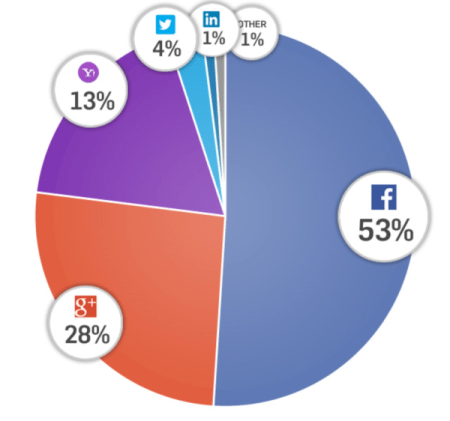
The third most popular service in North America is Yahoo with 15 percent, but it’s actually losing share in every vertical tracked by the service while Facebook is dominant across platforms and verticals.
Twitter, it’s worth noting, is a very minor player in the social login world. Both on the desktop and on mobile, it accounts for about 4 percent of social logins through Gigya’s services.
The one area where Google has made significant inroads is media, where it powers 32 percent of logins, but even there, Facebook gained 2 percent compared to Q4 2013.
On Mobile, Facebook’s lead is even more pronounced. There, it powers 62 percent of logins, followed by Google+ with 26 percent and Twitter with 6 percent. Yahoo is a distant fourth at 4 percent.
Overall, the North American market mirrors Gigya’s worldwide stats, where in aggregate, Facebook leads with 53 percent, followed by Google at 28 percent and Yahoo at 13 percent.
Outside of North America, Facebook’s lead is even more pronounced. In Europe, it powers 59 percent of social logins, while Google is at 19 percent and Russia’s VK powers 9 percent. In South America, Facebook now leads with an 80 percent market share compared to Google+’s 13 percent. The numbers in other regions are similar, with the exception of the Asia-Pacific market, where Google is far behind numerous local services, including QQ and Sina.
The third most popular service in North America is Yahoo with 15 percent, but it’s actually losing share in every vertical tracked by the service while Facebook is dominant across platforms and verticals.
Twitter, it’s worth noting, is a very minor player in the social login world. Both on the desktop and on mobile, it accounts for about 4 percent of social logins through Gigya’s services.
The one area where Google has made significant inroads is media, where it powers 32 percent of logins, but even there, Facebook gained 2 percent compared to Q4 2013.
On Mobile, Facebook’s lead is even more pronounced. There, it powers 62 percent of logins, followed by Google+ with 26 percent and Twitter with 6 percent. Yahoo is a distant fourth at 4 percent.
Overall, the North American market mirrors Gigya’s worldwide stats, where in aggregate, Facebook leads with 53 percent, followed by Google at 28 percent and Yahoo at 13 percent.
Outside of North America, Facebook’s lead is even more pronounced. In Europe, it powers 59 percent of social logins, while Google is at 19 percent and Russia’s VK powers 9 percent. In South America, Facebook now leads with an 80 percent market share compared to Google+’s 13 percent. The numbers in other regions are similar, with the exception of the Asia-Pacific market, where Google is far behind numerous local services, including QQ and Sina.
Wednesday, April 23, 2014
What Would You Do?
There has been and still is a ton of talk about employers asking potential employees during an interview about their Social Media habits.
Some employers are even asking for their username and password so they can login and see what they are doing.
So let me pose this question for thought.
Your in the middle of the interview, knocking it out of the ballpark, feeling really good about how things are going, then the interviewer turns the monitor around so you can see it and says, "As you can see this is the Facebook login page." "We found your Facebook page but it is marked private so I need your username and password so we can see what you post."
What would you do?
I have seen many humorous answers but I want everyone to consider what would you say?
I seen great answers in my search but the best one I've seen is this one.
Accessing my Facebook account is tantamount to asking for information such as age, marital status, sexual orientation, etc that are attached to my profile, and which you are not permitted to ask me about in an interview. Therefore, I must conclude that current law makes it illegal for you to request my login information.
I have to say that I would deny them access to my account.
Someone I knew told me one day that his company set up a new social media policy that you can't do this or can't post that. They way the company wrote the policy it took away any freedom he had about posting on anything.
He then did something very funny. He unfriended everyone that he worked with and then sent out a company wide email.
He said I have unfriended all employees of ***** that was on my Facebook account so nobody has to see me violate the new social media policy.
Classic.
I have seen many humorous answers but I want everyone to consider what would you say?
I seen great answers in my search but the best one I've seen is this one.
Accessing my Facebook account is tantamount to asking for information such as age, marital status, sexual orientation, etc that are attached to my profile, and which you are not permitted to ask me about in an interview. Therefore, I must conclude that current law makes it illegal for you to request my login information.
I have to say that I would deny them access to my account.
Someone I knew told me one day that his company set up a new social media policy that you can't do this or can't post that. They way the company wrote the policy it took away any freedom he had about posting on anything.
He then did something very funny. He unfriended everyone that he worked with and then sent out a company wide email.
He said I have unfriended all employees of ***** that was on my Facebook account so nobody has to see me violate the new social media policy.
Classic.
Monday, March 31, 2014
2 Year Old Google+ More Popular Then Twitter
I have said for a long time that Google+ will be the dominant number 2 social networking site in the world. They will eventually make a run at Facebook.
Garett Sloane reports that Google Plus has the same number of U.S. users as Twitter and more opportunity for brands, according to a new survey from Forrester Research. Google Plus, the two-year old network that put social in the search giant, is far from a ghost town as some have called it, the survey said.
In fact, 22 percent of people in a 60,000-person survey said they visit Google Plus monthly, the same percentage as people who said they visit Twitter. Of course, 72 percent visit Facebook monthly. Google Plus visitors topped LinkedIn, Pinterest and Instagram.
Nate Elliott, the Forrester researcher who found that brands are having a tougher time reaching Facebook users without paid campaigns, did the study.
“Put simply, Google Plus isn’t the Facebook killer some hoped it would be,” Elliott wrote on his blog today. “But that doesn’t mean marketers should ignore Plus. Far from it: I believe every marketer should use Google Plus.”
Elliott found that top brands have about 90 percent as many Google Plus fans as they have Twitter followers, on average.
“The brands we studied have more followers on Google Plus than on YouTube, Pinterest and Instagram combined,” Elliott wrote.
The report also found that Google Plus fans engage more with brand posts than they do on Twitter. Google says it has more than 300 million monthly users, which is more than Twitter at 240 million, but Nielsen has found people spend little time on Google Plus.
A recent New York Times Article called it a "ghost town," but that was met by some passionate fans, who disagreed with the comparison. Still, most marketers advise brands to have a presence on Google Plus because it can affect search positions.
In fact, 22 percent of people in a 60,000-person survey said they visit Google Plus monthly, the same percentage as people who said they visit Twitter. Of course, 72 percent visit Facebook monthly. Google Plus visitors topped LinkedIn, Pinterest and Instagram.
Nate Elliott, the Forrester researcher who found that brands are having a tougher time reaching Facebook users without paid campaigns, did the study.
“Put simply, Google Plus isn’t the Facebook killer some hoped it would be,” Elliott wrote on his blog today. “But that doesn’t mean marketers should ignore Plus. Far from it: I believe every marketer should use Google Plus.”
Elliott found that top brands have about 90 percent as many Google Plus fans as they have Twitter followers, on average.
“The brands we studied have more followers on Google Plus than on YouTube, Pinterest and Instagram combined,” Elliott wrote.
The report also found that Google Plus fans engage more with brand posts than they do on Twitter. Google says it has more than 300 million monthly users, which is more than Twitter at 240 million, but Nielsen has found people spend little time on Google Plus.
A recent New York Times Article called it a "ghost town," but that was met by some passionate fans, who disagreed with the comparison. Still, most marketers advise brands to have a presence on Google Plus because it can affect search positions.
Monday, March 24, 2014
Google+ Is A Must
If you are one of these people who think Google+ is just a knock off or a waste of time or even a second rate social network you are wrong. Dead wrong.
According to The New York Times, 540 million people per month are active on Google+. That number is staggering considering when Google+ started.
Remember this, some of your prospective customers are on Google+ and the only thing that’s missing is you.
Google Hangouts are absolutely awesome.
With just the click of a few buttons, you can message or video chat with virtually anyone, from friends to customers. Several companies are utilizing Google Hangouts to connect with their customers in a more intimate way.
I think one of the most important things to remember is that Google will index their own content quicker then anyone else. So your blogs and posts will index quickly and show up in Google searches quicker giving you and your brand more awareness.
Bottom line is this. If your a business and have a Facebook page you should have a Google+ page as well.
Remember, Google+ is connected to Gmail, YouTube, Google Drive, AdWords, Blogger, and Google Search.
Thursday, March 6, 2014
Multi-Device World
Facebook business says as tablets and smartphones become increasingly entwined with our everyday lives, switching between these devices and our trusty PCs is becoming increasingly common. A few years back, a person might have bought tickets to a concert online after seeing it advertised on TV or hearing about it on the radio. Today that same person might learn about a concert from any number of sources — a blog, app, social media, etc. — while using their smartphone during a morning commute. Then, later that day, they might buy tickets on their laptop or tablet.
To better understand people’s behavior across multiple devices, Facebook commissioned a study of more than 2,000 people from international market research agency GfK to explore these changes in the US and the resulting implications for marketers.1
The study shows that as multiple devices become an integral part of our lives, switching between them is becoming standard practice. More than 60% of online adults in the US use at least two devices everyday and almost one quarter use three devices. More than 40% of online adults sometimes start an activity on one device only to finish it on another.
Different devices, different roles
Though it’s easy to assume people use all devices for all purposes, it turns out that’s not the case. The GfK study found that people feel a different connection to each device, and each plays a distinct role.
In general the smartphone is considered the go-to device; 76% of adults who own one use it while they are out and about. It is always present and used most commonly for communication and social activity. The tablet is viewed as the entertainment hub and is often used at home, where 43% of tablets are shared with others. The laptop or desktop is the workhorse — 80% of online adults that own one use it at home, and it tends to be dedicated to important tasks like work or managing finances.

In search of convenience and comfort
More than 40% of online adults sometimes begin an activity on one device and finish on another, according to the GfK study. This number increases with the amount of devices one owns: 53% of people who own two devices switch between them to complete tasks or activities, and 77% of people who have three devices do the same. Reasons for switching vary, but in general people tend to move to a larger screen. Among all the device switches covered in the study, 22% ended with a tablet and 58% with a laptop.
Most often, people start on a smartphone, then move to the bigger screen for reasons including the ease of typing on a larger device. Comfort and convenience are the main reasons people switch devices mid-activity, but the urgency of the task, the length of time involved, security and privacy concerns, and the level of detail required are other important considerations. And while switching devices can happen at work, in cafes and everywhere in between, it occurs most often at home in front of the TV, when all devices are within easy reach.
Mobile throughout the day
The study showed that Facebook and email are the activities most likely to take place across devices, and that mobile is the only device used continuously throughout the day. For example, more than twice as many people in the study use their smartphones at work than their personal laptops, and people are 8X more likely to use their mobile on public transport than their laptop, and 2X more likely than their tablet.
Creating consistency in a complicated world
Not surprisingly, with people constantly moving between devices, it is important for marketers to reach their audience across all platforms. Brand experiences should be consistent, allowing for people to begin an activity on one device and finish on another. Facebook can help provide a constant thread by device and by context. Because people use their real identity on Facebook, it’s easier to reach, report and measure across devices, creating consistency in a complicated world.
Wednesday, March 5, 2014
Yahoo Stopping Access Of Facebook And Google
Reuters is reporting that Yahoo Inc will stop letting consumers access its various online services, including Fantasy Sports and photo-sharing site Flickr, by signing-in with their Facebook Inc orGoogle Inc credentials.
The change, which will be rolled out gradually according to a Yahoo spokeswoman, will require users to register for a Yahoo ID in order to use any of the Internet portal's services.
The move marks the latest change to Yahoo by Chief Executive Marissa Mayer, who is striving to spark fresh interest in the company's Web products and to revive its stagnant revenue.
"Yahoo is continually working on improving the user experience," the company said in a statement, noting that the new process "will allow us to offer the best personalized experience to everyone".
The first Yahoo service to require the new sign-in process is Yahoo Sports Tourney Pick'Em, a service focused on the NCAA college basketball tournament which begins later this month. News of the change to Yahoo's Tourney Pick'Em sign-in process was first reported by the technology blog Betanews.
Since Mayer took the reins in 2012, the company has rolled out new versions of many of its key products, including Yahoo Mail and Yahoo Finance. Last year, Yahoo announced a program to recycle inactive Yahoo user IDs, letting new users claim email addresses that have not been used for more than 12 months.
In eliminating the Facebook and Google sign-in features, Mayer, a former Google executive, is effectively reversing a strategy that Yahoo adopted in 2010 and 2011 under then CEO Carol Bartz.
The change to the Tourney Pick'Em sign-in process began on Monday, the Yahoo spokeswoman said, noting that users could still access other services with Google or Facebook IDs.
The sign-in buttons for Facebook and Google will eventually be removed from all Yahoo properties, the Yahoo spokeswoman, though she declined to provide a timeframe.
Tuesday, March 4, 2014
Google+ And Business
This is a great read from Navneet Kaushal. This shows the power of Google+ and their climb up the social networking ladder.
SEO Strategies that Work for Google Plus:
Google Plus is more than just a social networking site. It can be a way to boost your business and traffic to the website. Most of the Internet marketers are using social networking platform as the way to share information, get attention, reach out to potential business, and get success in the business.
Google Plus 2013 Statistics: An Overview:
Google Plus is the second largest social networking site after Facebook with 540 million monthly active users. Seeing the constant popularity of the social network, it comes as no surprise to us that 40% of the Internet marketers are using Google Plus and +1 button more than 5 billion times per day. With 1,203 million visits per month, the social network has dominated the monthly visits of Twitter and Facebook also.
Google Plus is a social network with a huge potential and it won’t be wrong to predict that it could be the next big thing in the world of social networking. If you still haven’t made Google Plus a part of your online marketing strategy, make no further delay.
While Google has clarified that number of +1s does not impact search rankings, Google Plus pages & profiles can increase your chances of getting targeted visitors from organic search. So, you ought to have an SEO Strategy for Google Plus.
SEO Strategy for Google Plus: We Recommend
Building Content Relevancy:
Content marketers as well as bloggers are using Google Plus profiles to attain authorship. For this, they write high quality content on subjects related to their business. To help search engines identify your authorship, here are a few tips to build content relevancy
Optimizing Google Plus Profile:
To make your Google Plus Profile more revealing to your followers, it is important that you optimize it. Complete all the required fields in your profile such as website URL, profile image, business details etc. Getting your page verified by Google will further add to the credibility.
Linking Google Plus Page to Website & Social Extensions:
Add Google Plus page directly to your website so that search engines can easily associate both. You should use the snippet of the code for the Google Plus page and connect it to the AdWords campaign and your social extensions.
Posting High Quality Content Consistently:
Your followers will loose interest if you will not stay in constant touch with them. This is done by posting high quality & useful content. The next step is to make the content dynamically engaging. You must offer solutions to readers’ problems and stay highly active in the comments section.
Google Plus Page and Snippet:
Google Plus Page is essential for a business of all sizes. However, keep in mind that a Google Plus page is not the same as a Google Plus profile. It offers you unique benefits of targeted messaging, multiple admin capability, direct interaction with fans, and connection to your website for improved search engine visibility. Once you have created a Google Plus page, optimize your Google Plus snippet, as this is crucial to drive traffic to the page. The benefits of optimization are:
It helps you in building more credibility on your authorship and content
It is a good tool for personal branding
It can capture the attention of searchers, resulting in more clicks and a growing number of followers
Google +1 Button:
Users can share the content in their social media network as well as encourage others to like it with one single click on the Google +1 button. Each time, the content is +1 users, it is shared within their networks. When more people +1, search engines get a signal that the content is relevant & worth sharing. As a result, your authorship gets a boost and so does your search engine ranking.
Google Plus Circle:
Follow influential and like-minded people related to your business field will enhance your Google Plus SEO strategy. If your Google Plus network is large, you will influence more search results of people who have you in their Google Plus circles.
Including Keyword in the Description:
Adding appropriate keywords in specially the first line of the description of your Google Plus post will help in driving traffic to your website/blog. Using Google Plus feature such as Spark to add videos & information related to the shared content automatically will further help in search engine rankings.
Google Communities:
Google Communities are a nice way of strengthening your authority. The more you will engage yourself in Community activities, higher will be the favor from search engines.
SEO Strategies that Work for Google Plus:
Google Plus is more than just a social networking site. It can be a way to boost your business and traffic to the website. Most of the Internet marketers are using social networking platform as the way to share information, get attention, reach out to potential business, and get success in the business.
Google Plus 2013 Statistics: An Overview:
Google Plus is the second largest social networking site after Facebook with 540 million monthly active users. Seeing the constant popularity of the social network, it comes as no surprise to us that 40% of the Internet marketers are using Google Plus and +1 button more than 5 billion times per day. With 1,203 million visits per month, the social network has dominated the monthly visits of Twitter and Facebook also.
Google Plus is a social network with a huge potential and it won’t be wrong to predict that it could be the next big thing in the world of social networking. If you still haven’t made Google Plus a part of your online marketing strategy, make no further delay.
While Google has clarified that number of +1s does not impact search rankings, Google Plus pages & profiles can increase your chances of getting targeted visitors from organic search. So, you ought to have an SEO Strategy for Google Plus.
SEO Strategy for Google Plus: We Recommend
Building Content Relevancy:
Content marketers as well as bloggers are using Google Plus profiles to attain authorship. For this, they write high quality content on subjects related to their business. To help search engines identify your authorship, here are a few tips to build content relevancy
Optimizing Google Plus Profile:
To make your Google Plus Profile more revealing to your followers, it is important that you optimize it. Complete all the required fields in your profile such as website URL, profile image, business details etc. Getting your page verified by Google will further add to the credibility.
Linking Google Plus Page to Website & Social Extensions:
Add Google Plus page directly to your website so that search engines can easily associate both. You should use the snippet of the code for the Google Plus page and connect it to the AdWords campaign and your social extensions.
Posting High Quality Content Consistently:
Your followers will loose interest if you will not stay in constant touch with them. This is done by posting high quality & useful content. The next step is to make the content dynamically engaging. You must offer solutions to readers’ problems and stay highly active in the comments section.
Google Plus Page and Snippet:
Google Plus Page is essential for a business of all sizes. However, keep in mind that a Google Plus page is not the same as a Google Plus profile. It offers you unique benefits of targeted messaging, multiple admin capability, direct interaction with fans, and connection to your website for improved search engine visibility. Once you have created a Google Plus page, optimize your Google Plus snippet, as this is crucial to drive traffic to the page. The benefits of optimization are:
It helps you in building more credibility on your authorship and content
It is a good tool for personal branding
It can capture the attention of searchers, resulting in more clicks and a growing number of followers
Google +1 Button:
Users can share the content in their social media network as well as encourage others to like it with one single click on the Google +1 button. Each time, the content is +1 users, it is shared within their networks. When more people +1, search engines get a signal that the content is relevant & worth sharing. As a result, your authorship gets a boost and so does your search engine ranking.
Google Plus Circle:
Follow influential and like-minded people related to your business field will enhance your Google Plus SEO strategy. If your Google Plus network is large, you will influence more search results of people who have you in their Google Plus circles.
Including Keyword in the Description:
Adding appropriate keywords in specially the first line of the description of your Google Plus post will help in driving traffic to your website/blog. Using Google Plus feature such as Spark to add videos & information related to the shared content automatically will further help in search engine rankings.
Google Communities:
Google Communities are a nice way of strengthening your authority. The more you will engage yourself in Community activities, higher will be the favor from search engines.
Friday, February 21, 2014
Facebook Taking A Shot At LinkedIn Adds Job Title Add Targeting
Beware LinkedIn. Facebook is coming after you. This newest add-on for business is a smack in the face or the proverbial shot across the bow.
Facebook’s targeting features are becoming simpler and even more powerful. In the coming weeks, our improved Core Audiences targeting options — the targeting features built into all of our ad buying interfaces — will begin rolling out, allowing advertisers around the world to reach precise audiences based on four main targeting types: location, demographic, interests and behaviors. And in the US, we’re also adding Partner Categories to the Ads Create Tool so that every marketer — from brands to local businesses — can use this targeting option.

Location
Say you’re a retailer that wants to show ads to people that live near your brick-and-mortar locations. With flexible location targeting, you can build campaigns around any combination of geographies: country and city (France and London), country and state (Canada and New York), state and city (California and Las Vegas), state and ZIP code (US only), etc. It's also easier to exclude certain areas — i.e., New York City, except 11211, or the UK, excluding Cambridge.
Demographic
Trying to boost sales at your flower shop? It’s now easier to reach people who have recently declared their love for someone on Facebook. Core Audiences features more values for relationship status (like civil unions and domestic partnerships) as well as timely changes in life events, like getting engaged or married. We've also added a level of flexibility long requested by marketers, which allow targeting for people that have gotten engaged or married in the past year, or the last 3 or 6 months.
Or, maybe you're a recruiter for a law firm and want to specifically advertise to associate attorneys at law firms in New York. Now you can. Core Audiences now covers information like workplace and job title, and offers expanded information about education.

Interests
We know that people have a ton of interests, and that marketers want to reach people specifically based on them. So we simplified how you can do this on Facebook by redefining our interest-based targeting segments so each has one simple meaning. Rather than having multiple targeting options like broad categories and keywords, we developed a new methodology that increases the precision of interest-based targeting by allowing advertisers to simply choose one segment. Now, if you want to reach baseball fans, just choose "baseball" as your targeting segment — it'll pull in all the people that have liked or expressed interest in baseball-related topics on Facebook.
Behaviors
We're including in Core Audiences a new targeting option, behaviors, which includes Partner Categories. This gives marketers the ability to target campaigns to people based on things they purchase and what devices they use. For instance, if you want to reach people interested in music that use iPhones, you'll use behaviors as part of creating your target audience.
Expanded availability of Partner Categories
Previously available only in Power Editor, Partner Categories will soon roll out to the Ads Create Tool for US advertisers, offering more marketers the ability to build audiences around offline actions.
Facebook’s targeting features are becoming simpler and even more powerful. In the coming weeks, our improved Core Audiences targeting options — the targeting features built into all of our ad buying interfaces — will begin rolling out, allowing advertisers around the world to reach precise audiences based on four main targeting types: location, demographic, interests and behaviors. And in the US, we’re also adding Partner Categories to the Ads Create Tool so that every marketer — from brands to local businesses — can use this targeting option.
Location
Say you’re a retailer that wants to show ads to people that live near your brick-and-mortar locations. With flexible location targeting, you can build campaigns around any combination of geographies: country and city (France and London), country and state (Canada and New York), state and city (California and Las Vegas), state and ZIP code (US only), etc. It's also easier to exclude certain areas — i.e., New York City, except 11211, or the UK, excluding Cambridge.
Demographic
Trying to boost sales at your flower shop? It’s now easier to reach people who have recently declared their love for someone on Facebook. Core Audiences features more values for relationship status (like civil unions and domestic partnerships) as well as timely changes in life events, like getting engaged or married. We've also added a level of flexibility long requested by marketers, which allow targeting for people that have gotten engaged or married in the past year, or the last 3 or 6 months.
Or, maybe you're a recruiter for a law firm and want to specifically advertise to associate attorneys at law firms in New York. Now you can. Core Audiences now covers information like workplace and job title, and offers expanded information about education.
Interests
We know that people have a ton of interests, and that marketers want to reach people specifically based on them. So we simplified how you can do this on Facebook by redefining our interest-based targeting segments so each has one simple meaning. Rather than having multiple targeting options like broad categories and keywords, we developed a new methodology that increases the precision of interest-based targeting by allowing advertisers to simply choose one segment. Now, if you want to reach baseball fans, just choose "baseball" as your targeting segment — it'll pull in all the people that have liked or expressed interest in baseball-related topics on Facebook.
Behaviors
We're including in Core Audiences a new targeting option, behaviors, which includes Partner Categories. This gives marketers the ability to target campaigns to people based on things they purchase and what devices they use. For instance, if you want to reach people interested in music that use iPhones, you'll use behaviors as part of creating your target audience.
Expanded availability of Partner Categories
Previously available only in Power Editor, Partner Categories will soon roll out to the Ads Create Tool for US advertisers, offering more marketers the ability to build audiences around offline actions.
Wednesday, January 29, 2014
British Intelligence Helps NSA With Real Time Monitoring Of Social Networks
British intelligence officials can infiltrate the very cables that transfer information across the internet, as well as monitor users in real time on sites like Facebook without the company's consent, according to documents leaked by Edward Snowden.
The internal documents reveal that British analysts gave instruction to members of the National Security Agency in 2012, showing them how to spy on Facebook, Twitter, and YouTube in real time and collect the computer addresses of billions of the sites’ uploaders.
The leaked documents are from a GCHQ publication titled ‘Psychology: A New Kind of SIGDEV’ (Signals Development). Published by NBC News on Monday, the papers detail a program dubbed ‘Squeaky Dolphin,’ which was developed for analysts working in “broad real-time monitoring of online activity.”
Sources told NBC that the British have proven their ability to both directly monitor the world’s web traffic cable and use a third party to view the data stream and extract information from it.
Representatives from the companies in question said they have not provided any data to the government of the United Kingdom under this program, either voluntarily or involuntarily. One person who wished to remain anonymous said that Google, the company that owns YouTube, was “shocked” to discover the UK may have been “grabbing” data for years.
Previously published disclosures have made it clear that the US and UK are sharing intelligence tactics. The Washington Post reported in October 2013 that the NSA and GCHQ collaborated on a program known as MUSCULAR, which the agencies used to record “entire data flows” from Yahoo and Google.
Security officials have consistently maintained that the programs are authorized under the laws of their respective nation and that the surveillance is designed only as a tool for preventing terrorism. Still, the lack of transparency has left civil liberties advocates searching for more answers.
“Governments have no business knowing which YouTube videos everyone in the world is watching,” Chris Soghoian, chief technologist for the American Civil Liberties Union, told NBC. “It’s one thing to spy on a particular person who has done something to warrant a government investigation but governments have no business monitoring the Facebook likes or YouTube views of hundreds of millions of people.”
When members of GCHQ delivered the presentation to NSA officials, they showed the Americans how to carry out the surveillance by extracting information from YouTube, Facebook, and Google’s Blogger service on February 13, 2012 - one day before anti-government protests were to begin in Bahrain.
According to the documents leaked by whistleblower Edward Snowden, the presenters were careful to mention that the intelligence gathering was not designed to monitor specific targets. “Not interested in individuals just broad trends!” one note reads.
Jason Healey, a former White House official under President George W. Bush, told NBC such activity not only sends a shiver through the public but has also become an impediment for Silicon Valley executives and the thriving social media industry.
“We want our security services to be out there and keeping us safe,” he said, “but we can also look for balance, we can look for limits, especially if we’re putting at risk this most transformative technology since Gutenberg.”
Recent Changes In Social Networks In Case You Missed It
Belle Beth Cooper says Social media changes so fast that we often miss the small differences on each platform we use. Every now and then I find it really useful to do a roundup of what’s been changing on the big networks lately. Here are 10 changes I found that took place in the last couple of months, which could be useful for your social media strategy.
1. TWITTER ROLLS OUT NEW DESIGN
A very recent update for Twitter’s web view is a new design that adds an inline Tweet composer:
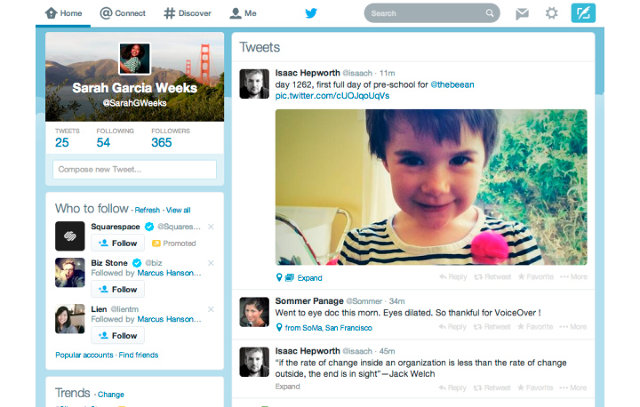
While the compose button and composer pop-up remain, you can now add a new Tweet much faster from the left-hand-side menu. The update also includes a fresh design for the navigation bar and a profile setting to choose accent colors.
2. TWITTER EMPHASIZES IMAGES EVEN MORE
It wasn’t long ago that Twitter added inline image previews to its official apps, including the web view.
Now, Twitter is including more image focus in the latest redesign, as you can see above. On the left-hand side of Twitter’s new web view, your profile and header images are now visible.
When we did a test before, about how Twitter’s new image highlighting affected metrics, we found that retweets shot up by 150% and looking at our metrics today, they are still high:
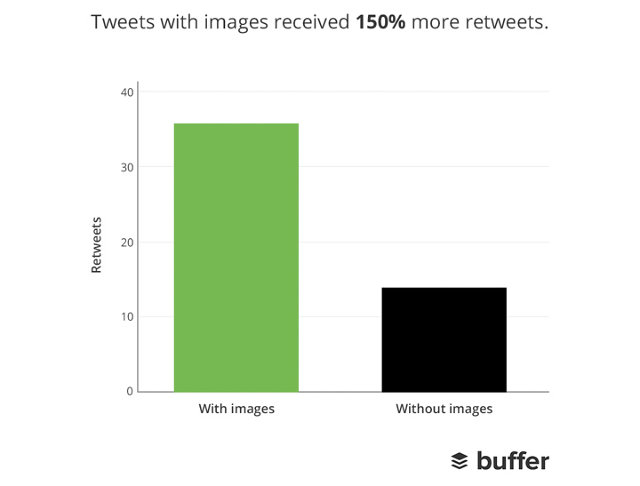
3. FACEBOOK CHANGES ITS ALGORITHM--AGAIN
Facebook has changed its ranking algorithm for the News Feed many times before. Yet another update came in December, as Facebook pushed for more “high quality content,” including a focus on news from media outlets.
From the Facebook announcement:
Why are we doing this? Our surveys show that on average people prefer links to high quality articles about current events, their favorite sports team or shared interests, to the latest meme.
The announcement goes on to talk about news articles versus memes even more specifically, saying that fewer “meme photos” hosted outside of Facebook will be shown in the News Feed. It also mentions a feature in the works to help you discover more interesting news:
Soon, after you click on a link to an article, you may see up to three related articles directly below the News Feed post to help you discover more content you may find interesting.
To keep posts from friends populating the News Feed, Facebook says it will bump up stories that have new comments more often than before.
Jay Baer has pointed out a few ways you can customize your own News Feed settings to have more control over what you see. For companies, however, it seems like this is a further push from Facebook to encourage more spending on ads.
4. TWITTER ADDS PHOTOS TO DMS
If you’re a fan of using Twitter’s direct messages, you’ll love this update. Twitter recently added the ability to send and receive images in DMs.
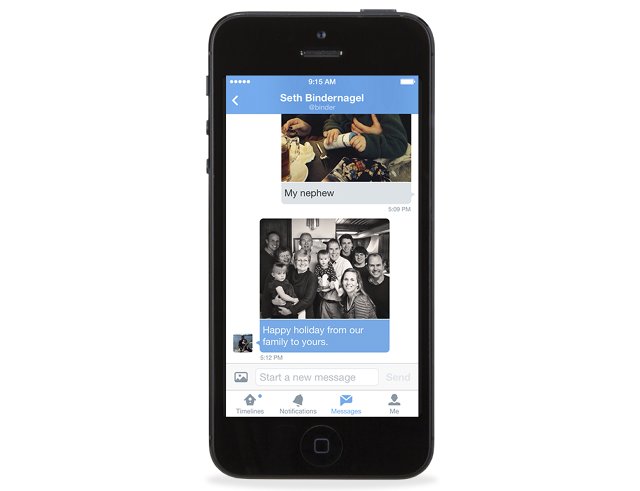
This update also added a tab for DMs into the navigation bar of Twitter’s official mobile apps, making DMs easier to use.
5. TWITTER ADDS PROMOTED ACCOUNTS TO MOBILE TIMELINES
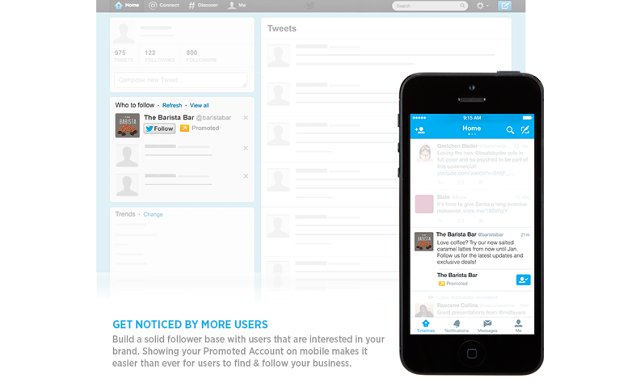
You’ve probably noticed promoted accounts in Twitter’s “Who to follow” sidebar section before. Now, advertisers can promote their accounts with a Tweet in Twitter’s mobile timelines.
The promotions work in the same way: advertisers only get charged for each person who follows their account. The accounts are displayed differently, though, with a full Tweet and a follow button inside the timeline in Twitter’s mobile apps:
6. FACEBOOK AND TWITTER HELP ADVERTISERS MEASURE CONVERSIONS
Facebook made a recent change to help retailers get more out of their Facebook ads by measuring offline conversions. Especially if we’re looking at how colors affect conversions, Facebook’s tips seem to be guided by a very deep underlying understanding of human behavior.
This is actually a feature that’s been around for a while, but it was previously available only to customers who worked with a Facebook “measurement partner.” The network is now opening it up to all advertisers.
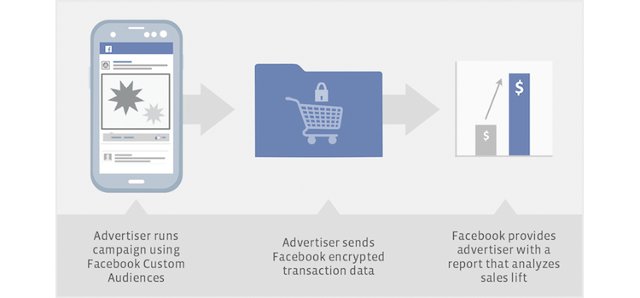
The way it works is retailers collect personal data about offline consumers, upload it in a hashed form, and Facebook matches it with internal hashed data about those same consumers. This lets Facebook work out whether any of those purchases were made by consumers who saw one of the retailer’s ads.
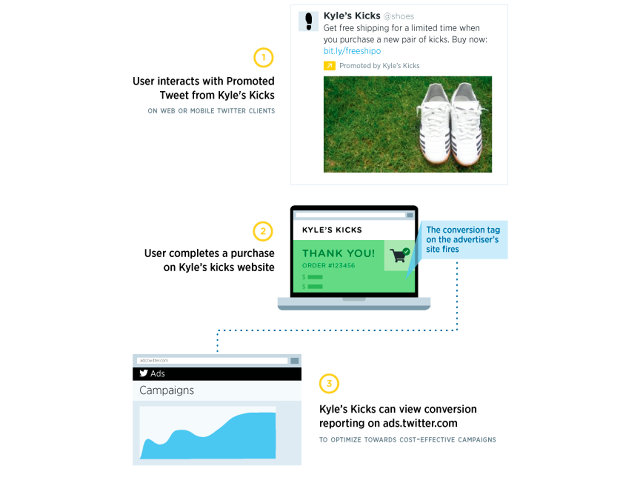
In December, Twitter opened up online conversion tracking to all advertisers. This lets Twitter ads customers track conversions and engagement on promoted Tweets:
7. TWITTER OFFERS TAILORED AUDIENCES TO ADVERTISERS
To make Twitter ads more effective and appealing, a recent change from Twitterrolled out “tailored audiences” to all advertisers. This lets advertisers take advantage of browser cookies to serve up ads to users who have recently visited their website.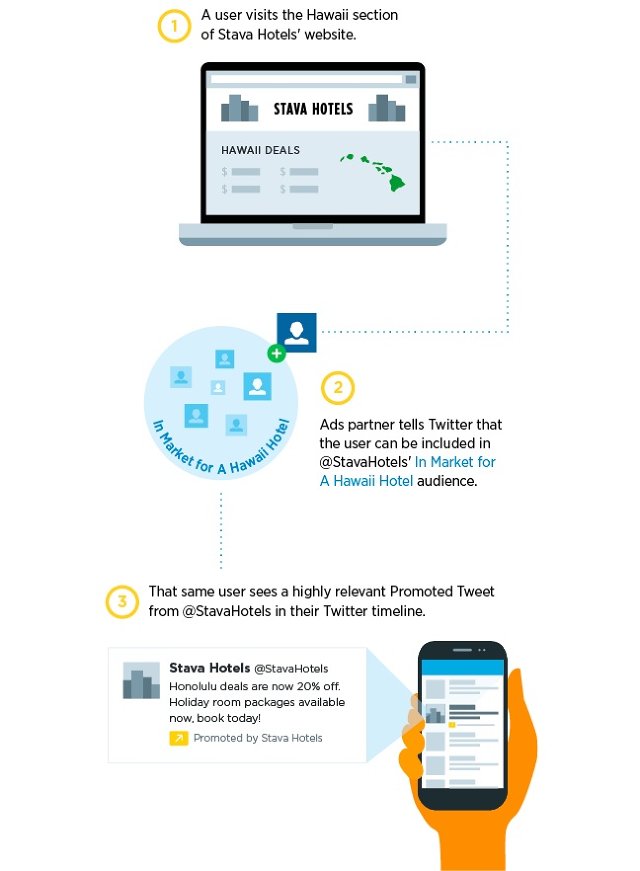
To make Twitter ads more effective and appealing, a recent change from Twitterrolled out “tailored audiences” to all advertisers. This lets advertisers take advantage of browser cookies to serve up ads to users who have recently visited their website.
8. LINKEDIN ANNOUNCES SHOWCASE PAGES FOR COMPANIES
Among the slew of ad-related updates is an update from LinkedIn to Company Pages. LinkedIn has long been making waves by making it easier for companies to get exposure and opening up it’s APIs for more great use cases. Companies can now create Showcase Pages on LinkedIn, to focus on a particular brand, business area or initiative.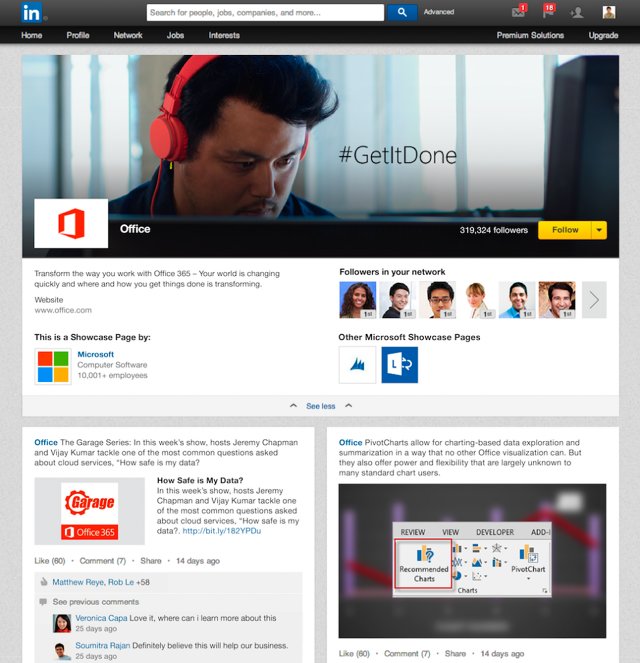
LinkedIn users can follow Showcase Pages, which are focused on content updates, to keep on top of any new posts.
Among the slew of ad-related updates is an update from LinkedIn to Company Pages. LinkedIn has long been making waves by making it easier for companies to get exposure and opening up it’s APIs for more great use cases. Companies can now create Showcase Pages on LinkedIn, to focus on a particular brand, business area or initiative.
LinkedIn users can follow Showcase Pages, which are focused on content updates, to keep on top of any new posts.
9. FACEBOOK UPDATES ITS PAGE COMPOSER
A slightly older change, made in November 2013, is this one to Facebook’s Page Composer. The update includes making it easier to schedule posts for your Facebook Page, reducing the number of steps required from 12 to 4.
What’s particularly interesting is new push and addition for scheduling Facebook posts. This is in fact something, Twitter had introduced earlier in the year too. It seems that scheduling your posts is becoming more and more of an encouraged behavior from both Twitter and Facebook.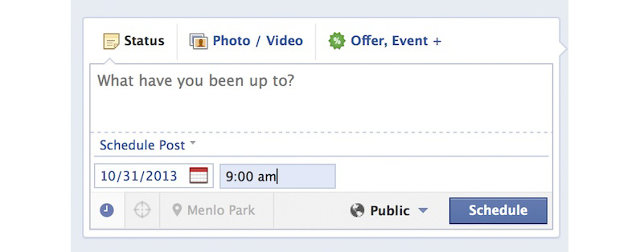
It’s also easier to upload multiple photos at once now, with drag-and-drop, and a photo icon in the composer makes it easy to upload a photo or video when posting an update.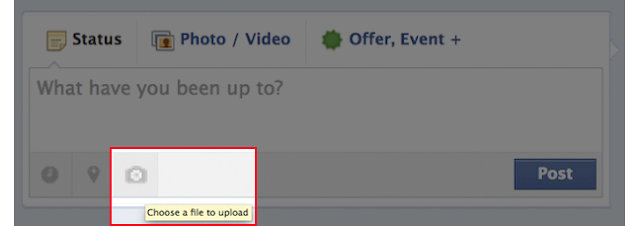
A slightly older change, made in November 2013, is this one to Facebook’s Page Composer. The update includes making it easier to schedule posts for your Facebook Page, reducing the number of steps required from 12 to 4.
What’s particularly interesting is new push and addition for scheduling Facebook posts. This is in fact something, Twitter had introduced earlier in the year too. It seems that scheduling your posts is becoming more and more of an encouraged behavior from both Twitter and Facebook.
It’s also easier to upload multiple photos at once now, with drag-and-drop, and a photo icon in the composer makes it easy to upload a photo or video when posting an update.
10. TWITTER ADDS SEARCH FILTERS ON MOBILE
Finally, another update from November is the addition of search filters to Twitter’s mobile apps. The new options let you add a filter to any Twitter search, limiting results to photos only, videos, or just Tweets from people you follow.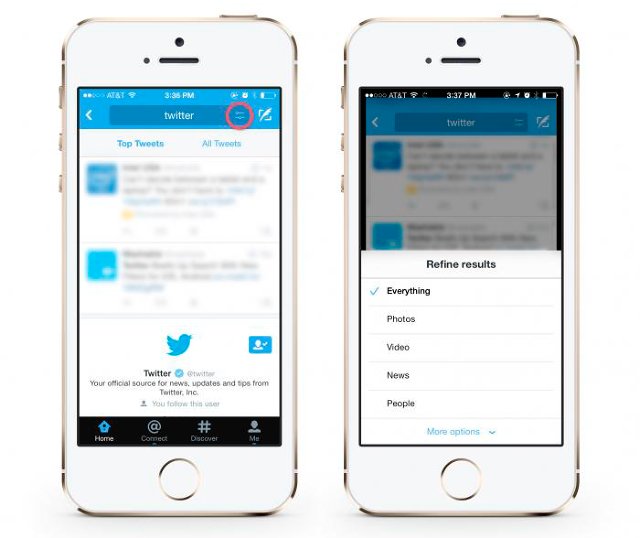
Finally, another update from November is the addition of search filters to Twitter’s mobile apps. The new options let you add a filter to any Twitter search, limiting results to photos only, videos, or just Tweets from people you follow.
Friday, January 24, 2014
The Greatest Comeback In History From Facebook
In what I believe is the greatest comeback to a bad article, Facebook has released a humorous article that Princeton will be gone by 2021.
This article is outstanding and kudos to Facebook for putting this out in response to that preposterous article by Princeton. Read below:
This article is outstanding and kudos to Facebook for putting this out in response to that preposterous article by Princeton. Read below:
Debunking Princeton
Like many of you, we were intrigued by a recent article by Princeton researchers predicting the imminent demise of Facebook. Of particular interest was the innovative use of Google search data to predict engagement trends, instead of studying the actual engagement trends. Using the same robust methodology featured in the paper, we attempted to find out more about this "Princeton University" - and you won't believe what we found!
In keeping with the scientific principle "correlation equals causation," our research unequivocally demonstrated that Princeton may be in danger of disappearing entirely. Looking at page likes on Facebook, we find the following alarming trend:

Now, Facebook isn't the only repository of human knowledge out there. A search of Google Scholar revealing a plethora of scholarly articles of great scholarliness turned up the following results, showing the percentage of articles matching the query "Princeton" by year:

The trend is similarly alarming: since 2009, the percentage of "Princeton" papers in journals has dropped dramatically.
Of course, Princeton University is primarily an institution of higher learning - so as long as it has students, it'll be fine. Unfortunately, in investigating this, we found a strong correlation between the undergraduate enrollment of an institution and its Google Trends index:

Sadly, this spells bad news for this Princeton entity, whose Google Trends search scores have been declining for the last several years:

This trend suggests that Princeton will have only half its current enrollment by 2018, and by 2021 it will have no students at all, agreeing with the previous graph of scholarly scholarliness. Based on our robust scientific analysis, future generations will only be able to imagine this now-rubble institution that once walked this earth.
While we are concerned for Princeton University, we are even more concerned about the fate of the planet — Google Trends for "air" have also been declining steadily, and our projections show that by the year 2060 there will be no air left:

As previous researchers [J. Sparks, 2008] have expressed in the past, this will have grievous consequences for the fate of all humanity, not just our academic colleagues in New Jersey.
Although this research has not yet been peer-reviewed, every Like for this post counts as a peer review. Start reviewing!
P.S. We don’t really think Princeton or the world’s air supply is going anywhere soon. We love Princeton (and air). As data scientists, we wanted to give a fun reminder that not all research is created equal – and some methods of analysis lead to pretty crazy conclusions.
Research by Mike Develin, Lada Adamic, and Sean Taylor.
In keeping with the scientific principle "correlation equals causation," our research unequivocally demonstrated that Princeton may be in danger of disappearing entirely. Looking at page likes on Facebook, we find the following alarming trend:
Now, Facebook isn't the only repository of human knowledge out there. A search of Google Scholar revealing a plethora of scholarly articles of great scholarliness turned up the following results, showing the percentage of articles matching the query "Princeton" by year:
The trend is similarly alarming: since 2009, the percentage of "Princeton" papers in journals has dropped dramatically.
Of course, Princeton University is primarily an institution of higher learning - so as long as it has students, it'll be fine. Unfortunately, in investigating this, we found a strong correlation between the undergraduate enrollment of an institution and its Google Trends index:
Sadly, this spells bad news for this Princeton entity, whose Google Trends search scores have been declining for the last several years:
This trend suggests that Princeton will have only half its current enrollment by 2018, and by 2021 it will have no students at all, agreeing with the previous graph of scholarly scholarliness. Based on our robust scientific analysis, future generations will only be able to imagine this now-rubble institution that once walked this earth.
While we are concerned for Princeton University, we are even more concerned about the fate of the planet — Google Trends for "air" have also been declining steadily, and our projections show that by the year 2060 there will be no air left:
As previous researchers [J. Sparks, 2008] have expressed in the past, this will have grievous consequences for the fate of all humanity, not just our academic colleagues in New Jersey.
Although this research has not yet been peer-reviewed, every Like for this post counts as a peer review. Start reviewing!
P.S. We don’t really think Princeton or the world’s air supply is going anywhere soon. We love Princeton (and air). As data scientists, we wanted to give a fun reminder that not all research is created equal – and some methods of analysis lead to pretty crazy conclusions.
Research by Mike Develin, Lada Adamic, and Sean Taylor.
Tuesday, January 21, 2014
YouTube Comments Appearing On Google+ Has An Opt Out
I admit this freely. I am a YouTube junkie. As someone who works on a PC 8-10 hours a day I need something extra to keep me going. YouTube is my Red Bull my Five Hour Energy. I listen and sing all day to music from YouTube. And yes, if my walls had ears they would bleed.
After the latest move from Google where they shared what you post on YouTube to your Google+ account, that kinda turned me off from making any posts on YouTube.
Today though I could not help myself and had to post a comment after listening to a song by an non mainstream artist. ( Shameless Plug For That Artist )
When I started to post I noticed a little pop up under the comment field in YouTube that was not there last week.

Notice the check box. The feedback was highly unpopular for Google doing this to begin with. I am glad to see that they gave users the option to NOT SHARE every comment they post.
Kudos Google for making that change.
After the latest move from Google where they shared what you post on YouTube to your Google+ account, that kinda turned me off from making any posts on YouTube.
Today though I could not help myself and had to post a comment after listening to a song by an non mainstream artist. ( Shameless Plug For That Artist )
When I started to post I noticed a little pop up under the comment field in YouTube that was not there last week.
Notice the check box. The feedback was highly unpopular for Google doing this to begin with. I am glad to see that they gave users the option to NOT SHARE every comment they post.
Kudos Google for making that change.
Monday, January 13, 2014
Out in the Open: An NSA-Proof Twitter, Built With Code From Bitcoin and BitTorrent
This is a great read by KLINT FINLEY.
Anything we can do to stop the NSA from invading our privacy is a huge plus.
I would imagine this will become the norm for folks who want to stop all the prying eyes.
When mass political protests erupted throughout Brazil in June, Miguel Freitas did what countless others did: He followed the news on Twitter. Tweets revealed information he couldn't get anywhere else, including the mainstream media. “Brazilian media is highly concentrated,” says Freitas, an engineer based in Rio de Janeiro. “I have been able to read news that a lot of friends never heard about.”
He believes that Twitter plays a major role in promoting democracy and organizing protests in places like Brazil and the Middle East — and that’s why he was so concerned when former National Security Agency contractor Edward Snowden leaked details about the U.S. government’s massive surveillance of internet traffic and social networks. Almost immediately, Freitas started building a more secure and robust alternative to Twitter, making use of code from two other massively successful online projects: bitcoin and BitTorrent.
Although he gives Twitter credit for resisting government pressure to hand over user data, Freitas remains worried about people putting too much information in the hands of one company. “As much as I like using Twitter for news reading, the possibility of a single entity being able to control this important flux of information made no sense to me,” he says.
His alternative is called Twister. It’s a decentralized social network that, in theory, can’t be shut down by any one entity. What’s more, Twister is designed to prevent other users from knowing whether you’re online, what your IP address is, or who you follow. You can still post public messages a la Twitter, but when you send direct and private messages to others, they’re protected with the same encryption scheme used by LavaBit, the e-mail provider used by Edward Snowdan.
After spending a few months hacking on the project — including a stint coding and backpacking on Trindade Island — Freitas and his collaborator Lucas Leal have completed a test version of the app that runs on Android, Linux, and OSX. Freitas has no plan to create a Windows or iPhone version, but since the code is open source, others are free to port the app to additional operating systems.
Twister is surprisingly easy to use for an application that’s so new, that isn’t controlled by a central authority, and that places so much emphasis on security. Other decentralized alternatives to Twitter and Facebook — such as Pump.io, Identicaand Diaspora — require that you either operate your own dedicated server or trust someone else to run a server for you. Twister works more like peer-to-peer file sharing software: Launch the app, and it connects with other users. There’s no need for a central server.
It manages this trick through the bitcoin protocol, though not the network that actually drives the digital currency. Basically, the protocol handles user registration and logins. Just as machines — called miners — verify transactions over the bitcoin network to ensure no one double-spends bitcoins and everyone spends only their own coins, a network of Twister computers verifies that user names aren’t registered twice, and that posts attached to a particular user name are really coming from that user.
Posts are handled through the BitTorrent protocol. This lets the system distribute a large number of posts through the network quickly and efficiently, and it lets users receive near-instant notifications about new posts and messages — all without the need for central servers.
Why would anyone operate a miner? On bitcoin, miners compete in a kind of cryptographic lottery to earn the currency. Twister takes a similar approach, but instead of dolling out bitcoins, it gives you the privilege of sending promoted messages — basically ads — to Twister users. At the moment, Twister is designed to show users no more than one promoted message per day. “The mechanism is actually quite democratic,” Freitas writes on the Twister site. “This is effectively an advertising mechanism reaching the entire population of Twister users.” He points out that this could be used not just by commercial outfits, but by non-profit organizations that need to promote a cause.
It’s a great example of how the open source bitcoin software can be repurposed for other applications. The possibilities are almost endless, says Brian Armstrong, the co-founder of Bitcon wallet companyCoinbase. “It’s a fundamentally new invention that has all sorts of applications, just like the internet.”
You shouldn't bet your life on Twister — at least not yet. It’s still under test, and Freitas points out that if someone is monitoring your internet traffic — or mass monitoring internet users — they’d still be able to find your IP address (Freitas suggests those looking for additional protection consider the Tor Project‘s anonymity software).
But what Freitas and Leal have accomplished so far is quite impressive. “When I realized it was a viable idea, I took it as a personal challenge to implement,” he says. “No one is going to be convinced of implementing my idea just because I think it is a neat one. I must do it myself.”
Anything we can do to stop the NSA from invading our privacy is a huge plus.
I would imagine this will become the norm for folks who want to stop all the prying eyes.
When mass political protests erupted throughout Brazil in June, Miguel Freitas did what countless others did: He followed the news on Twitter. Tweets revealed information he couldn't get anywhere else, including the mainstream media. “Brazilian media is highly concentrated,” says Freitas, an engineer based in Rio de Janeiro. “I have been able to read news that a lot of friends never heard about.”
He believes that Twitter plays a major role in promoting democracy and organizing protests in places like Brazil and the Middle East — and that’s why he was so concerned when former National Security Agency contractor Edward Snowden leaked details about the U.S. government’s massive surveillance of internet traffic and social networks. Almost immediately, Freitas started building a more secure and robust alternative to Twitter, making use of code from two other massively successful online projects: bitcoin and BitTorrent.
Although he gives Twitter credit for resisting government pressure to hand over user data, Freitas remains worried about people putting too much information in the hands of one company. “As much as I like using Twitter for news reading, the possibility of a single entity being able to control this important flux of information made no sense to me,” he says.
His alternative is called Twister. It’s a decentralized social network that, in theory, can’t be shut down by any one entity. What’s more, Twister is designed to prevent other users from knowing whether you’re online, what your IP address is, or who you follow. You can still post public messages a la Twitter, but when you send direct and private messages to others, they’re protected with the same encryption scheme used by LavaBit, the e-mail provider used by Edward Snowdan.
After spending a few months hacking on the project — including a stint coding and backpacking on Trindade Island — Freitas and his collaborator Lucas Leal have completed a test version of the app that runs on Android, Linux, and OSX. Freitas has no plan to create a Windows or iPhone version, but since the code is open source, others are free to port the app to additional operating systems.
Twister is surprisingly easy to use for an application that’s so new, that isn’t controlled by a central authority, and that places so much emphasis on security. Other decentralized alternatives to Twitter and Facebook — such as Pump.io, Identicaand Diaspora — require that you either operate your own dedicated server or trust someone else to run a server for you. Twister works more like peer-to-peer file sharing software: Launch the app, and it connects with other users. There’s no need for a central server.
It manages this trick through the bitcoin protocol, though not the network that actually drives the digital currency. Basically, the protocol handles user registration and logins. Just as machines — called miners — verify transactions over the bitcoin network to ensure no one double-spends bitcoins and everyone spends only their own coins, a network of Twister computers verifies that user names aren’t registered twice, and that posts attached to a particular user name are really coming from that user.
Posts are handled through the BitTorrent protocol. This lets the system distribute a large number of posts through the network quickly and efficiently, and it lets users receive near-instant notifications about new posts and messages — all without the need for central servers.
Why would anyone operate a miner? On bitcoin, miners compete in a kind of cryptographic lottery to earn the currency. Twister takes a similar approach, but instead of dolling out bitcoins, it gives you the privilege of sending promoted messages — basically ads — to Twister users. At the moment, Twister is designed to show users no more than one promoted message per day. “The mechanism is actually quite democratic,” Freitas writes on the Twister site. “This is effectively an advertising mechanism reaching the entire population of Twister users.” He points out that this could be used not just by commercial outfits, but by non-profit organizations that need to promote a cause.
It’s a great example of how the open source bitcoin software can be repurposed for other applications. The possibilities are almost endless, says Brian Armstrong, the co-founder of Bitcon wallet companyCoinbase. “It’s a fundamentally new invention that has all sorts of applications, just like the internet.”
You shouldn't bet your life on Twister — at least not yet. It’s still under test, and Freitas points out that if someone is monitoring your internet traffic — or mass monitoring internet users — they’d still be able to find your IP address (Freitas suggests those looking for additional protection consider the Tor Project‘s anonymity software).
But what Freitas and Leal have accomplished so far is quite impressive. “When I realized it was a viable idea, I took it as a personal challenge to implement,” he says. “No one is going to be convinced of implementing my idea just because I think it is a neat one. I must do it myself.”
Friday, January 10, 2014
Seeking Employment? Give Me Your Facebook ID And Password First
It would appear that certain employers are requesting your Facebook login credentials so they can look at your account in full. Are you kidding me??
What kind of ludicrous crap is this anyway? As someone who has worked in computer security for over a decade I find this as offensive as someone trying to read my mail or stealing my identity. It would appear that some employers do not think so.
Virginia State Police requires that an applicant login to their social media account with someone watching them so they can read and see what they have said. They consider this a "background check"
"The social media aspect is just one small part of a very complex process that takes place, and when you're entrusting an individual with the powers to enforce the law, we are going to make sure that we have vetted this person thoroughly," says spokesperson Corinne Geller.
Geller added that this part of the background check is optional (although nobody has ever refused), and denying access is "not an automatic disqualifier."
Well it may not be an automatic disqualifier but I wonder how many have been hired without doing it.
Privacy cannot be skewed in any form. My Social Media accounts are mine. Not my employer, not my Mothers or Fathers, not the Police and not even the NSA.
The world use to hire people before social media. I wonder if they ask people to bring their mail in or record their phone calls.
Click on this LINK to see what your state has in place to protect you from this.
What kind of ludicrous crap is this anyway? As someone who has worked in computer security for over a decade I find this as offensive as someone trying to read my mail or stealing my identity. It would appear that some employers do not think so.
Virginia State Police requires that an applicant login to their social media account with someone watching them so they can read and see what they have said. They consider this a "background check"
"The social media aspect is just one small part of a very complex process that takes place, and when you're entrusting an individual with the powers to enforce the law, we are going to make sure that we have vetted this person thoroughly," says spokesperson Corinne Geller.
Geller added that this part of the background check is optional (although nobody has ever refused), and denying access is "not an automatic disqualifier."
Well it may not be an automatic disqualifier but I wonder how many have been hired without doing it.
Privacy cannot be skewed in any form. My Social Media accounts are mine. Not my employer, not my Mothers or Fathers, not the Police and not even the NSA.
The world use to hire people before social media. I wonder if they ask people to bring their mail in or record their phone calls.
Click on this LINK to see what your state has in place to protect you from this.
Thursday, January 9, 2014
Facebook Continuing Strong Push, Twitter Continues To Fall
Facebook (FB) is continuing its climb up the stock ladder while Twitter can't seem to hold on. Facebook reached an all time high yesterday during trading and while the stock has lost just a touch of ground today it is currently trading at 57.79
In retrospect Twitter (TWTR) has lost nearly
3% again and is trading at 57.43
Any takers on Facebook making it to $100.00
by the end of the year?
In retrospect Twitter (TWTR) has lost nearly
3% again and is trading at 57.43
Any takers on Facebook making it to $100.00
by the end of the year?
I will say it now, Facebook will make $100 a share by the end of the year.
Thursday, January 2, 2014
LinkedIn and Pinterest more popular than Twitter?
More U.S. adults use LinkedIn and Pinterest than Twitter, but that website attracts a greater proportion of blacks and young adults than do its social media peers, a Pew Research Center study released on Monday showed.
Photo pin-up site Pinterest spiked in popularity over the past year, according to the survey, a poll of 1,445 Internet users aged 18 and older. About 21 percent of respondents said they employ the service, up sharply from 15 percent in a similar survey conducted a year ago.
The figure was 22 percent for LinkedIn and 18 percent for Twitter, holding roughly steady from a year ago. About 29 percent of the blacks surveyed by Pew made use of Twitter, well above 16 percent for whites and Hispanics, the study showed.
Twitter ranks higher than Pinterest in terms of engagement, however: 46 percent of users surveyed go onto the online messaging service daily, versus 23 percent for Pinterest and just 13 percent for LinkedIn.
Industry experts have said Twitter is less intuitive than Facebook and thus can turn off users, curtailing its growth as a mainstream social media platform.
According to a Reuters/Ipsos poll conducted in October, 36 percent of 1,067 people who have joined Twitter say they do not use it, and 7 percent say they have shut their account. In contrast, only 7 percent of 2,449 Facebook members report not using the online social network, and 5 percent say they have shut down their account.
The Pew study polled users of Facebook, Instagram, Twitter, LinkedIn and Pinterest - five of the largest U.S. social media services.
About 71 percent of respondents said they used Facebook, up from 67 percent a year earlier and granting it the highest popularity ranking. But some analysts speculate that younger users are gravitating away from Facebook, the world's largest social network, and toward newer services such as SnapChat or Instagram.
"Facebook is the dominant social networking platform in the number of users, but a striking number of users are now diversifying onto other platforms," the Pew study read.
"Pinterest holds particular appeal to female users (women are four times as likely as men to be Pinterest users), and LinkedIn is especially popular among college graduates and Internet users in higher-income households."
Friday, December 13, 2013
Facebook New Plan To Steal TV And YouTube Dollars
Facebook is making a major play on Youtube and TV is would appear. One of my favorite bloggers
“Avoid saying anything negative about YouTube – leave the impression of the user experience up to them” Facebook tells its adtech partners in a leaked, confidential deck that teaches them to sell Facebook’s video ads. The 32-page document details Facebook’s plan to beat television with reach and YouTube with targeting, and spills the beans about an overhaul to video insights slated for Q1 2014.
If Facebook’s plan works, it could lure in tons of ad revenue as marketers shift their focus from television to digital.
The full “Facebook For Business: Video On Facebook” presentation including slides and Facebook’s notes is splayed out below. It was sent to Facebook’s Preferred Marketing Developer partners in late November to teach them to sell video ads to their clients. [Correction: This was sent to marketers, not presented at a meeting.] Facebook used NDAs to try to keep the presentation away from the public, but I’ve attained a copy.
Facebook’s pitch for video ads breaks down to three things, as explained in this excerpt from the presentation:
1.You want to be where people are. Changing consumer behavior should shape where you spend your marketing dollars.
2.You want to reach all of the people who matter to you. Facebook has unparalleled targeted reach.
3.You want to be in the most engaging digital real estate, which, as you just saw, is Facebook’s News Feed.
Fighting TV With Reach
It doesn’t take long for Facebook to start bluntly insulting the stalwart advertising medium. “Gone are the days when a family gathered around their TV on Sunday night to connect with the outside world. Television is no longer a guaranteed way to reach and engage your target audience,” Facebook writes. It cites an eMarketer studying saying time spent on digital will surpass TV in 2013, and notes people open their phone 100 times a day and Facebook 10-15 times a day.

Facebook then hits hard with graphs and Nielsen stats, saying that each major TV network only reach 55% to 61% of 18-24 year olds during prime time, but Facebook reaches 70%. Facebook later hawks its “Blast” campaigns that let brands reach the majority of people on Facebook with a video ad within one to three days.
Other than Google, few digital companies have the ability to reach an entire populace, which classically could only be found on TV. Facebook slams other digital properties, stating ”A lot of time is spent by people on mobile with Google properties, YouTube, Yahoo!, MSN, AOL, Twitter and Pinterest…And more total time is spent on mobile on Facebook and Instagram than all of those combined.” It’s that scale, the ability to reach hundreds of millions of people quickly, that Facebook hopes will attract the world’s biggest advertisers.
Fighting YouTube And TV With Targeting
“On TV, advertisers don’t always know who people are, and over deliver to certain people and can’t reach other people. So advertisers end up hitting the same people over and over again with a large portion of the audience being underexposed.” Again, Facebook isn’t pulling punches here.

One of the social network’s greatest assets is its trove of ad-fueling personal data. Users pour demographic and interest data into their profiles to share with friends and be found, but Facebook also leverages that data to be able to pinpoint them with relevant ads. Taking a dig at YouTube where a lot of demographic data is inferred indirectly and not always accurately, Facebook writes “In narrowly targeted campaigns, the average online reach is 38% accurate, but on Facebook, our average reach is 89% accurate.”
Facebook also touts that users volunteer to watch video ads on its platform instead of being required to watch on YouTube, so the impressions should be valued higher. “When you use video on Facebook, these are chosen views – the consumers clicks to play or scrolls through to watch the video as compared to an ad on YouTube interrupting the user experience and feeling forced.”
Still, Facebook doesn’t want its ad partners coming off as bullies so it explains “Avoid saying anything negative about YouTube.” Instead, partners are supposed to lay out the facts and just imply YouTube is inferior.
Except that it isn’t, at least not right now. And Facebook admits that.
“BACKGROUND FOR SALES RE: VIDEO INSIGHTS vs. YouTube
Currently, we only report on video plays, which is a weakness compared to YouTube, which reports on video views, completed views, and average duration of view. We are working on building out our video insights to give advertisers a better sense for how videos are performing. New video insights target launch: Q1 2014. [NOTE: Video insights improvements are highlight (sic) confidential]“
 So by next year, Facebook’s video ad insights will be a better match for YouTube, but until then, partners are supposed to cite metrics about likes and comments, larger ad images, and a more “streamlined” post-click experience. The fact is that Television is the status quo for advertisers, and YouTube’s roadblock ads (even if you can skip them after five seconds) work similarly to traditional TV commercials. That means Facebook still has an uphill climb in selling its video ads.
While users might be scared that these video ads will stick out like sore thumbs on Facebook, the company is actually in the middle of a push to bring a lot more organic, user generated video to the site. It’s now rolling out its new auto-play video feature on the web and mobile. Facebook mentions videos ads you “scroll through”, which could be a subtle way of noting that auto-play video ads are coming.
But the big thing absent from this deck is measurement. TV and some other online ad platforms have a tough time proving that marketing spend on them generates a return on investment. Facebook may be discounting one of its most potent weapons in the ad war. Online, Facebook hooks into sales information through cookies, hashed CRM data, and Autofill With Facebook. Offline, brick and mortar data providers like Datalogix and Facebook’s Custom Audiences tool let advertisers see if showing someone an ad made them buy more.
It may not be the platform with the biggest reach, targeting, or engagement that captures the ad dollars fleeing television in print, but the one that can best prove its ads actually work.
–
More on Facebook’s big video push:
Facebook Puts The News Feed In Motion
Facebook Videos Now Auto-Play On Mobile, Expect Video Ads Soon
–
Full leaked video ads deck below with Facebook’s presenter notes as captions.


Before we dive in, I want to give you a peek at what we mean by ‘video on Facebook.’
We aren’t talking about video ads on the right column of desktop or even just in desktop News Feed – we are talking about video delivered in the palm of your hand wherever you go. Video that takes up almost the entire mobile screen and plays seamlessly in line. This is video on Facebook.

There couldn’t be a better time to invest in video on Facebook. Why? Three critical components of successful marketing are aligned to drive your business results:
1. You want to be where people are. Changing consumer behavior should shape where you spend your marketing dollars.
2. You want to reach all of the people who matter to you. Facebook has unparalleled targeted reach.
3. You want to be in the most engaging digital real estate, which, as you just saw, is Facebook’s News Feed.

If you want people to see your brand messages, you have to reach them where they are spending time.

Consumers are changing the way they spend their time – with more and more people spending time on digital.
Gone are the days when a family gathered around their TV on Sunday night to connect with the outside world.
Television is no longer a guaranteed way to reach and engage your target audience

To get the best perspective on the changes taking place now, it might help to go back to the 50’s
That was the last time a new medium came along to capture the most time per day of people: TV surpassed radio
It was such an important medium that people significantly expanded the amount of time they spent with media
Source: “Mobile helps propel digital time spent’, eMarketer, July 2013

Television quickly became the focus for people, and soon thereafter the advertising industry, and it ruled for over 50 years
Source: “Mobile helps propel digital time spent’, eMarketer, July 2013

In the 90’s, we saw a new shift: people began to spend time on Digital media as well
And, according to eMarketer, in 2013 the amount of time people spend per day on Digital media will surpass television
Source: “Mobile helps propel digital time spent’, eMarketer, July 2013

It’s important to point out that it was mobile (smartphones and tablets) that not only pushed Digital to this inflection point, but is also now the majority of time spent on Digital
And once again, people are adding to the total time they spend with media as they leverage the power of mobile to remain connected to the people and things they care about throughout the day
Source: “Mobile helps propel digital time spent’, eMarketer, July 2013

Looking forward, it’s not hard to imagine time spent with Digital continuing to increase, and Mobile taking an even more dominant share of that time as technology makes staying connected even easier
Even if you haven’t been investing in TV to date, this data should cause you to stop in your tracks because it speaks to the fact that we’re all now operating in a new paradigm and we have to take digital seriously
Source: “Mobile helps propel digital time spent’, eMarketer, August 2013

We can all relate to the shift of consumption to mobile because, for many of us, it’s now a device that is with us all day, every day.
In fact, people check their phone 100x/ day and they check Facebook 10-15x/day.

Facebook’s role in the shift to mobile comes to life in terms of time spent on mobile.
A lot of time is spent by people on mobile with Google properties, YouTube, Yahoo!, MSN, AOL, Twitter and Pinterest
And more total time is spent on mobile on Facebook and Instagram than all of those combined
In fact, Facebook and Instagram make up 21% of total time spent on mobile.
In the end, as marketers, this type of engagement gives you significant opportunities to connect with your core consumers.

But, it’s not just about the engagement we’re seeing on mobile. Facebook’s scale and targeting capabilities enable you to reach all of the people who matter to you.

In the US, you can reach 179M people every month. Many of these people are on Facebook every single day. In fact, you can reach 128M people every day in the US and 101M people every day on mobile.

[Customize this slide with your client’s demographics]
On this slide is an audience example for gamers, 18-34 in the US. It is based off of the FB BCT ‘Console Gaming,’ which includes ‘People that have liked pages related to console gaming or otherwise expressed interest in console gaming on Facebook.’

Facebook can help you access customer segments that have typically been hard or very expensive to reach. The size of our global audience coupled with our targeting capabilities enables advertisers to find audiences who they may not be able to find consistently or at scale on other media platforms.
For example, on TV, advertisers don’t always know who people are, and over deliver to certain people and can’t reach other people. So advertisers end up hitting the same people over and over again with a large portion of the audience being underexposed.
With Facebook, you can precisely reach the audience you want, and know that your impressions are being delivered to the right people.
*Data: Network 1: 56%, Network 2: 55%, Network 3: 61%, Network 4: 59%, FB: 70%
Uses Nielsen’s TV/Internet/ Mobile Data Fusion panel to measure differences in reach between Facebook (PC + Mobile) and TV networks looking at a full month of data.

But, you may be wondering how to consider Facebook in relation to your investment in TV advertising.
Facebook delivers incremental reach above TV, particularly for the highly coveted 25-34 demo
During daytime, Facebook can increase reach above each of the major broadcast networks by 125 to 160+% among 25 to 34 year olds.
During Primetime, Facebook can increase reach by 25% to 38% among 25 to 34 year olds.
Key Takeaway: Content consumption has changed dramatically in the past few years — shifting meaningfully toward digital channels, particularly mobile. As a result, online, and Facebook particularly, are able to deliver audiences at a scale that allows marketers to either efficiently drive incremental reach on top of TV or execute cross media campaigns with massive reach.
NOTE: Significant incremental reach among 18-24 year olds as well (see slides in appendix)
Daytime: 81-95%
Primetime: 56% – 78%

People are themselves Facebook, which means we can deliver more accurate targeting, based on real information about our users. This also means that advertisers can deliver the most relevant and resonant messages to their target audiences.
The same is true – and even more significant in narrowly targeted campaigns.
In narrowly targeted campaigns, the average online reach is 38% accurate, but on Facebook, our average reach is 89% accurate.
Because of this high accuracy on Facebook, businesses aren’t seeing wasted impressions like they do in other mediums.

So, how will your brand show up on Facebook? Facebook News Feed puts your brand in the center of the most engaging digital real estate.

The News Feed puts brands front and center for the consumer, offering rich ways to capture attention and engagement. The News Feed is a personalized newspaper – where people go to consume photos of their friends and family, news stories, and content from brands.
Similar to television, mobile naturally lends itself to a linear experience, where consumers focus on one piece of content at a time. Every piece of content, whether a photo or an article or an ad, now has the opportunity to capture attention and engagement. Ads consumed in a linear format are 9X more effective than those consumed on a traditional web page, which typically contain multiple ads. The linear format can take up the full screen on mobile and provides a captive moment for marketers to capture attention. [Datalogix]
When you use video on Facebook, these are chosen views – the consumers clicks to play or scrolls through to watch the video as compared to an ad on YouTube interrupting the user experience and feeling forced.
MORE DETAIL RE: CENTER OF EXPERIENCE
The News Feed is the main event on mobile. And, given businesses can appear in the News Feed, they can essentially takeover the entire homepage, resulting in the ultimate engagement with consumers. Our advertising units in News Feed are highly engaging given that they are equal in size and prominence as content from a user’s friends and family. They are not off to the side or secondary to the experience, but are central to the experience and delivered in a linear way.
SIZE
News Feed ads are 2x the the size of a 300×250 banner, and often can be full screen in mobile.
STATS
FB mobile Page post ads are 10-120% more likely to regularly draw attention than other ad types
Likelihood that FB ads and SS regularly draw attention on mobile as compared to other ad type
10% more than Pre-roll or Mid-roll Ads
22% more than Video Ads
38% more than Banner Ads
120% more than Pop-up Ads
Source: Prosper Mobile Insights, July 2012.

Video ads deploy sight, sound, and motion to grab your audience’s attention in News Feed
Page post video ads drive stronger performance than off-site video links given they are optimized for video views and provide a seamless experience to the viewer. Their images are also 11x larger than offsite video, ensuring your brand gets noticed.
FB vs YouTube stats
16.6% of YouTube visits came from Facebook in September 2013 (comScore MyMetrix Source/Loss report, worldwide, home and work – DESKTOP)
OBJECTION HANDLING RECO
Clients may bring up YouTube and argue that it’s better to be on YouTube given they have access to the aggregate counter and more video views. Potential response:
Yes, YouTube has the aggregate counter, but Facebook’s Ad Insights provides additional stats re: likes, comments, and shares
Facebook offers a larger image in the most engaging place on the web – thumbnail takes up a lot of space in News Feed
The post-click experience with native Facebook video is more streamlined than the experience when a user clicks on a link pointing to an offsite video player (see next slide)
BACKGROUND FOR SALES RE: VIDEO INSIGHTS vs. YouTube
Currently, we only report on video plays, which is a weakness compared to YouTube, which reports on video views, completed views, and average duration of view. We are working on building out our video insights to give advertisers a better sense for how videos are performing. New video insights target launch: Q1 2014. [NOTE: Video insights improvements are highlight confidential]

The experience with Facebook native video is much more seamless than when the user is taken offsite to view a video.
This experience becomes even more choppy offsite for age-gated content (e.g., from an alcohol brand) given the person must sign-in to the other app to view the video.
SPEAKING TIPS GIVEN SHOWING YOUTUBE COMPARISON
Emphasize the informational/ educational nature of the video
Avoid saying anything negative about YouTube – leave the impression of the user experience up to them

Video can be used across the brand objectives you consider for media planning.
Media planning – these three happen one after the other
1.”Seed”: $50-$100/$200K hyper-targeted teaser to start generating buzz about your new product or brand campaign with your core target audience (e.g., using Partner Categories, Custom Audiences, Interests, competitor’s Interests)
2.”Blast”: $500K-$1M campaign to drive mass awareness of your new product or brand campaign to your target audience (typically over a 1-3 day period)
3.”Sustained” media: reinforce your message after the initial blast. You should tailor creative to specific audiences to drive the best results. These campaigns can range anywhere from a week to a few months.

For your blast period, combine the value of video and guaranteed reach in News Feed
Reach the majority of people on Facebook in one or three days with your Page post video message through News Feed
Run campaigns on desktop and/or mobile
Own the segment: One marketer per audience per day
Guaranteed impressions to audience over 24 hours (Reach Block) or 72 hours (Target Block)
Best use cases for mass awareness campaigns:
Product or marketing campaign launch
Drive mass awareness of a time-sensitive message
Teasers to build excitement
Build creative that speaks to the entire audience

You can precede a blast campaign with a ‘seed campaign’ and then follow-up a blast campaign with a ‘sustain campaign.’
Achieve the lowest cost-per-view by combining our accurate, granular targeting capabilities with your compelling video messages
Reach a custom cluster of people who will react favorably to a specific video creative
Run these sustained, targeted campaigns in tandem with mass awareness campaigns to drive the best results
Recommendations
Select a thumbnail that draws people in
Capture their attention in the first 5 seconds
Keep creative short and sweet: no need for an entire story
You can also run sustained campaigns with a mix of photos and videos, depending on your objectives and creative available.

I’ve highlighted why there couldn’t be a better time to invest in video on Facebook.
Be where people are – on mobile.
Targeted reach – reach all of the people who matter to you
Put your brand in the most engaging digital real estate – Facebook’s News Feed.
Now, I want to tell you about a few brands that have had tremendous success using video on Facebook. These brands are driving business results.

comScore action lift study (March 2013) analyzed 10 gaming campaigns across multiple genres – campaigns included a variety of ad units, including video.
Results are compared to a holdout group.

Brands can use high-quality content to build awareness
To launch its new title, Call of Duty: Ghosts, Activision used Facebook ads primarily on mobile to drive video views of its game trailer at scale
Objective: Increase awareness of Activision’s new console game, Call of Duty: Ghosts, with males 18-44 in the U.S.
Delivered 50M impressions over a 3-day period, with majority of impressions delivered on mobile
Performance
55% of US males aged 18-24 were reached over 3-day period – Reached 20M US males 18-44 and 23M people in total
85% of impressions delivered on-target, compared to industry norm of 41% (Nielsen Cross-Publisher Online Campaign Ratings)
14% lift in brand awareness among the target audience (18-44)
24% lift in brand awareness among males 25-34
OMD, Activision’s media agency, leveraged Nielsen measurement solutions to validate and compare reach efficiency across its entire digital marketing plan, as well as determine the impact Facebook messaging had on shifting brand metrics such as awareness and message recall

Results
50% ahead of goal for pre-orders of the game (the company was looking to achieve 10% of its total pre-order goal by end of its fiscal year March 31, 2012 and it achieved 15%).
385% increase in people talking about this
8% increase in fans, or nearly 200,000 new fans. The Resident Evil Page now has more than 3 million fans, which means Capcom can reach 350 million friends of fans.
552% lift in viral reach for the Page
Goals
Working with its agency Tangible Media, Capcom wanted to engage with existing fans of the Resident Evil Page and acquire new ones:
To make the launch of the new title feel like an event in a way that would generate buzz in the media and on the Internet
To drive pre-orders of the game
Approach
[PAGES] Tangible and Capcom made Facebook the center of its campaign to create a massive event out of the announcement of the Resident Evil title on January 19, 2012, seven months ahead of the game’s actual release.
Capcom created a mysterious microsite, nohopeleft.com, and Facebook Page to promote viral teaser content leading up to the official game announcement on the Resident Evil Page.The No Hope Left Page contained cryptic videos and photos featuring panicked citizens and deserted cities, which were hints for existing Resident Evil fans and engaged new fans through all of the viral sharing.
[ADS] The media portion on Facebook had three main phases, all designed to create broad awareness in the gaming and entertainment community.:
The first phase included a flight of Premium Ads designed to build pre-awareness and anticipation around the March 19 reveal of Resident Evil 6..:
Ads included the scary videos and a poll asking people “What would you do when all is lost?”
Another ad invited people to RSVP for a secret event set for March 19, 2102
Ads were targeted at Resident Evil’s large base of then 2 million fans and the broader console gaming community
The second phase was designed to reveal the announcement trailer created for RE6:
A Target Block to U.S. males 18-34 featured Premium Page post Ads to promote the announcement trailer, encouraging people to watch and share the video with their friends
A portion of the video ads drove traffic to a custom tab on the Resident Evil Page with links to pre-order the game
In the third phase, Capcom sustained enthusiasm for the game using a variety of Premium, Marketplace Ads and sponsored stories:
Premium Ads featured the trailer and polls asking fans what characters in the game they were most excited for
Marketplace Ads were used to grow the Resident Evil fan base and were targeted at console gamers

Background
Wendy’s launched a product in 2013 – pretzel bacon cheeseburger
Typically run a product in a few select markets before launching across the US
In test markets, saw people were obsessed with it
Creative agency came up with program called Pretzel Love Songs, essentially making fun of boy bands and love song genre
As people submitted their love songs, Wendy’s asked them if they could use them for advertisements
The real hook was people got to be famous for a minute in a video that Wendy’s was pushing out to tens of thousands of people, primarily through Facebook – they shared these videos over time as different volumes.
This was very different for their brand – typically very traditional with their marketing
BUT, spoke directly to an insight – people want to be famous
Performance
Reach: 83M unique individuals
52.7% TV-only
23.2% Overlap
8.3% FB-only
(persons 18+, Nielsen XCR reach)
Typical media buy just talking about impressions and TRPs, but they were able to get MANY unique individuals
Over 8% reached only through digital marketing (incremental reach through FB)
62% of Facebook-only reach was with Millennials – a big deal for Wendy’s given they want to connect with that generation
Huge engagement: 5M+ video views and 1.7B total impressions
Media ROI: % reach from Facebook far exceeded % of investment on Facebook
What does this mean for the company?
Excellent sales results and ROI
They will emulate this strategy in the future b/c it worked so well
Background available in Ad Week video:http://adweek.mlbam.com/video/v30927297 (22:00 – 35:00)

OBJECTIVE:
Wanted to boost brand loyalty and drive viewership of its Ramadan Holiday video
STRATEGY:
Launched a combined TV and FB campaign
4 videos showcasing banks reverence of traditional Saudi values
Two Reach Blocks guaranteed that the ads reached the entire Saudi Facebook audience that logged in that day.
RESULTS:
Strong uplift in brand awareness generated by Facebook campaign as found through Bank Albilad’s own internal study.
“Facebook increased our brand loyalty given the valued interaction between our audience and us. This platform, Facebook, was one of the main channels for such a campaign and it will remain a crucial platform for future campaigns.”
Mohammed R. Abaalkheil, Head of Marcom Division, Bank Albilad
Images: https://na7.salesforce.com/069A0000000eaSp

in the world Josh Constine from techcrunch.com was able to attain a copy of Facebook's attack plan.
Read his article here and think about what this would mean in value for Facebook.
“Avoid saying anything negative about YouTube – leave the impression of the user experience up to them” Facebook tells its adtech partners in a leaked, confidential deck that teaches them to sell Facebook’s video ads. The 32-page document details Facebook’s plan to beat television with reach and YouTube with targeting, and spills the beans about an overhaul to video insights slated for Q1 2014.
If Facebook’s plan works, it could lure in tons of ad revenue as marketers shift their focus from television to digital.
The full “Facebook For Business: Video On Facebook” presentation including slides and Facebook’s notes is splayed out below. It was sent to Facebook’s Preferred Marketing Developer partners in late November to teach them to sell video ads to their clients. [Correction: This was sent to marketers, not presented at a meeting.] Facebook used NDAs to try to keep the presentation away from the public, but I’ve attained a copy.
Facebook’s pitch for video ads breaks down to three things, as explained in this excerpt from the presentation:
1.You want to be where people are. Changing consumer behavior should shape where you spend your marketing dollars.
2.You want to reach all of the people who matter to you. Facebook has unparalleled targeted reach.
3.You want to be in the most engaging digital real estate, which, as you just saw, is Facebook’s News Feed.
Fighting TV With Reach
It doesn’t take long for Facebook to start bluntly insulting the stalwart advertising medium. “Gone are the days when a family gathered around their TV on Sunday night to connect with the outside world. Television is no longer a guaranteed way to reach and engage your target audience,” Facebook writes. It cites an eMarketer studying saying time spent on digital will surpass TV in 2013, and notes people open their phone 100 times a day and Facebook 10-15 times a day.
Facebook then hits hard with graphs and Nielsen stats, saying that each major TV network only reach 55% to 61% of 18-24 year olds during prime time, but Facebook reaches 70%. Facebook later hawks its “Blast” campaigns that let brands reach the majority of people on Facebook with a video ad within one to three days.
Other than Google, few digital companies have the ability to reach an entire populace, which classically could only be found on TV. Facebook slams other digital properties, stating ”A lot of time is spent by people on mobile with Google properties, YouTube, Yahoo!, MSN, AOL, Twitter and Pinterest…And more total time is spent on mobile on Facebook and Instagram than all of those combined.” It’s that scale, the ability to reach hundreds of millions of people quickly, that Facebook hopes will attract the world’s biggest advertisers.
Fighting YouTube And TV With Targeting
“On TV, advertisers don’t always know who people are, and over deliver to certain people and can’t reach other people. So advertisers end up hitting the same people over and over again with a large portion of the audience being underexposed.” Again, Facebook isn’t pulling punches here.
One of the social network’s greatest assets is its trove of ad-fueling personal data. Users pour demographic and interest data into their profiles to share with friends and be found, but Facebook also leverages that data to be able to pinpoint them with relevant ads. Taking a dig at YouTube where a lot of demographic data is inferred indirectly and not always accurately, Facebook writes “In narrowly targeted campaigns, the average online reach is 38% accurate, but on Facebook, our average reach is 89% accurate.”
Facebook also touts that users volunteer to watch video ads on its platform instead of being required to watch on YouTube, so the impressions should be valued higher. “When you use video on Facebook, these are chosen views – the consumers clicks to play or scrolls through to watch the video as compared to an ad on YouTube interrupting the user experience and feeling forced.”
Still, Facebook doesn’t want its ad partners coming off as bullies so it explains “Avoid saying anything negative about YouTube.” Instead, partners are supposed to lay out the facts and just imply YouTube is inferior.
Except that it isn’t, at least not right now. And Facebook admits that.
“BACKGROUND FOR SALES RE: VIDEO INSIGHTS vs. YouTube
Currently, we only report on video plays, which is a weakness compared to YouTube, which reports on video views, completed views, and average duration of view. We are working on building out our video insights to give advertisers a better sense for how videos are performing. New video insights target launch: Q1 2014. [NOTE: Video insights improvements are highlight (sic) confidential]“
So by next year, Facebook’s video ad insights will be a better match for YouTube, but until then, partners are supposed to cite metrics about likes and comments, larger ad images, and a more “streamlined” post-click experience. The fact is that Television is the status quo for advertisers, and YouTube’s roadblock ads (even if you can skip them after five seconds) work similarly to traditional TV commercials. That means Facebook still has an uphill climb in selling its video ads.While users might be scared that these video ads will stick out like sore thumbs on Facebook, the company is actually in the middle of a push to bring a lot more organic, user generated video to the site. It’s now rolling out its new auto-play video feature on the web and mobile. Facebook mentions videos ads you “scroll through”, which could be a subtle way of noting that auto-play video ads are coming.
But the big thing absent from this deck is measurement. TV and some other online ad platforms have a tough time proving that marketing spend on them generates a return on investment. Facebook may be discounting one of its most potent weapons in the ad war. Online, Facebook hooks into sales information through cookies, hashed CRM data, and Autofill With Facebook. Offline, brick and mortar data providers like Datalogix and Facebook’s Custom Audiences tool let advertisers see if showing someone an ad made them buy more.
It may not be the platform with the biggest reach, targeting, or engagement that captures the ad dollars fleeing television in print, but the one that can best prove its ads actually work.
–
More on Facebook’s big video push:
Facebook Puts The News Feed In Motion
Facebook Videos Now Auto-Play On Mobile, Expect Video Ads Soon
–
Full leaked video ads deck below with Facebook’s presenter notes as captions.
Before we dive in, I want to give you a peek at what we mean by ‘video on Facebook.’
We aren’t talking about video ads on the right column of desktop or even just in desktop News Feed – we are talking about video delivered in the palm of your hand wherever you go. Video that takes up almost the entire mobile screen and plays seamlessly in line. This is video on Facebook.
There couldn’t be a better time to invest in video on Facebook. Why? Three critical components of successful marketing are aligned to drive your business results:
1. You want to be where people are. Changing consumer behavior should shape where you spend your marketing dollars.
2. You want to reach all of the people who matter to you. Facebook has unparalleled targeted reach.
3. You want to be in the most engaging digital real estate, which, as you just saw, is Facebook’s News Feed.
If you want people to see your brand messages, you have to reach them where they are spending time.
Consumers are changing the way they spend their time – with more and more people spending time on digital.
Gone are the days when a family gathered around their TV on Sunday night to connect with the outside world.
Television is no longer a guaranteed way to reach and engage your target audience
To get the best perspective on the changes taking place now, it might help to go back to the 50’s
That was the last time a new medium came along to capture the most time per day of people: TV surpassed radio
It was such an important medium that people significantly expanded the amount of time they spent with media
Source: “Mobile helps propel digital time spent’, eMarketer, July 2013
Television quickly became the focus for people, and soon thereafter the advertising industry, and it ruled for over 50 years
Source: “Mobile helps propel digital time spent’, eMarketer, July 2013
In the 90’s, we saw a new shift: people began to spend time on Digital media as well
And, according to eMarketer, in 2013 the amount of time people spend per day on Digital media will surpass television
Source: “Mobile helps propel digital time spent’, eMarketer, July 2013
It’s important to point out that it was mobile (smartphones and tablets) that not only pushed Digital to this inflection point, but is also now the majority of time spent on Digital
And once again, people are adding to the total time they spend with media as they leverage the power of mobile to remain connected to the people and things they care about throughout the day
Source: “Mobile helps propel digital time spent’, eMarketer, July 2013
Looking forward, it’s not hard to imagine time spent with Digital continuing to increase, and Mobile taking an even more dominant share of that time as technology makes staying connected even easier
Even if you haven’t been investing in TV to date, this data should cause you to stop in your tracks because it speaks to the fact that we’re all now operating in a new paradigm and we have to take digital seriously
Source: “Mobile helps propel digital time spent’, eMarketer, August 2013
We can all relate to the shift of consumption to mobile because, for many of us, it’s now a device that is with us all day, every day.
In fact, people check their phone 100x/ day and they check Facebook 10-15x/day.
Facebook’s role in the shift to mobile comes to life in terms of time spent on mobile.
A lot of time is spent by people on mobile with Google properties, YouTube, Yahoo!, MSN, AOL, Twitter and Pinterest
And more total time is spent on mobile on Facebook and Instagram than all of those combined
In fact, Facebook and Instagram make up 21% of total time spent on mobile.
In the end, as marketers, this type of engagement gives you significant opportunities to connect with your core consumers.
But, it’s not just about the engagement we’re seeing on mobile. Facebook’s scale and targeting capabilities enable you to reach all of the people who matter to you.
In the US, you can reach 179M people every month. Many of these people are on Facebook every single day. In fact, you can reach 128M people every day in the US and 101M people every day on mobile.
[Customize this slide with your client’s demographics]
On this slide is an audience example for gamers, 18-34 in the US. It is based off of the FB BCT ‘Console Gaming,’ which includes ‘People that have liked pages related to console gaming or otherwise expressed interest in console gaming on Facebook.’
Facebook can help you access customer segments that have typically been hard or very expensive to reach. The size of our global audience coupled with our targeting capabilities enables advertisers to find audiences who they may not be able to find consistently or at scale on other media platforms.
For example, on TV, advertisers don’t always know who people are, and over deliver to certain people and can’t reach other people. So advertisers end up hitting the same people over and over again with a large portion of the audience being underexposed.
With Facebook, you can precisely reach the audience you want, and know that your impressions are being delivered to the right people.
*Data: Network 1: 56%, Network 2: 55%, Network 3: 61%, Network 4: 59%, FB: 70%
Uses Nielsen’s TV/Internet/ Mobile Data Fusion panel to measure differences in reach between Facebook (PC + Mobile) and TV networks looking at a full month of data.
But, you may be wondering how to consider Facebook in relation to your investment in TV advertising.
Facebook delivers incremental reach above TV, particularly for the highly coveted 25-34 demo
During daytime, Facebook can increase reach above each of the major broadcast networks by 125 to 160+% among 25 to 34 year olds.
During Primetime, Facebook can increase reach by 25% to 38% among 25 to 34 year olds.
Key Takeaway: Content consumption has changed dramatically in the past few years — shifting meaningfully toward digital channels, particularly mobile. As a result, online, and Facebook particularly, are able to deliver audiences at a scale that allows marketers to either efficiently drive incremental reach on top of TV or execute cross media campaigns with massive reach.
NOTE: Significant incremental reach among 18-24 year olds as well (see slides in appendix)
Daytime: 81-95%
Primetime: 56% – 78%
People are themselves Facebook, which means we can deliver more accurate targeting, based on real information about our users. This also means that advertisers can deliver the most relevant and resonant messages to their target audiences.
The same is true – and even more significant in narrowly targeted campaigns.
In narrowly targeted campaigns, the average online reach is 38% accurate, but on Facebook, our average reach is 89% accurate.
Because of this high accuracy on Facebook, businesses aren’t seeing wasted impressions like they do in other mediums.
So, how will your brand show up on Facebook? Facebook News Feed puts your brand in the center of the most engaging digital real estate.
The News Feed puts brands front and center for the consumer, offering rich ways to capture attention and engagement. The News Feed is a personalized newspaper – where people go to consume photos of their friends and family, news stories, and content from brands.
Similar to television, mobile naturally lends itself to a linear experience, where consumers focus on one piece of content at a time. Every piece of content, whether a photo or an article or an ad, now has the opportunity to capture attention and engagement. Ads consumed in a linear format are 9X more effective than those consumed on a traditional web page, which typically contain multiple ads. The linear format can take up the full screen on mobile and provides a captive moment for marketers to capture attention. [Datalogix]
When you use video on Facebook, these are chosen views – the consumers clicks to play or scrolls through to watch the video as compared to an ad on YouTube interrupting the user experience and feeling forced.
MORE DETAIL RE: CENTER OF EXPERIENCE
The News Feed is the main event on mobile. And, given businesses can appear in the News Feed, they can essentially takeover the entire homepage, resulting in the ultimate engagement with consumers. Our advertising units in News Feed are highly engaging given that they are equal in size and prominence as content from a user’s friends and family. They are not off to the side or secondary to the experience, but are central to the experience and delivered in a linear way.
SIZE
News Feed ads are 2x the the size of a 300×250 banner, and often can be full screen in mobile.
STATS
FB mobile Page post ads are 10-120% more likely to regularly draw attention than other ad types
Likelihood that FB ads and SS regularly draw attention on mobile as compared to other ad type
10% more than Pre-roll or Mid-roll Ads
22% more than Video Ads
38% more than Banner Ads
120% more than Pop-up Ads
Source: Prosper Mobile Insights, July 2012.
Video ads deploy sight, sound, and motion to grab your audience’s attention in News Feed
Page post video ads drive stronger performance than off-site video links given they are optimized for video views and provide a seamless experience to the viewer. Their images are also 11x larger than offsite video, ensuring your brand gets noticed.
FB vs YouTube stats
16.6% of YouTube visits came from Facebook in September 2013 (comScore MyMetrix Source/Loss report, worldwide, home and work – DESKTOP)
OBJECTION HANDLING RECO
Clients may bring up YouTube and argue that it’s better to be on YouTube given they have access to the aggregate counter and more video views. Potential response:
Yes, YouTube has the aggregate counter, but Facebook’s Ad Insights provides additional stats re: likes, comments, and shares
Facebook offers a larger image in the most engaging place on the web – thumbnail takes up a lot of space in News Feed
The post-click experience with native Facebook video is more streamlined than the experience when a user clicks on a link pointing to an offsite video player (see next slide)
BACKGROUND FOR SALES RE: VIDEO INSIGHTS vs. YouTube
Currently, we only report on video plays, which is a weakness compared to YouTube, which reports on video views, completed views, and average duration of view. We are working on building out our video insights to give advertisers a better sense for how videos are performing. New video insights target launch: Q1 2014. [NOTE: Video insights improvements are highlight confidential]
The experience with Facebook native video is much more seamless than when the user is taken offsite to view a video.
This experience becomes even more choppy offsite for age-gated content (e.g., from an alcohol brand) given the person must sign-in to the other app to view the video.
SPEAKING TIPS GIVEN SHOWING YOUTUBE COMPARISON
Emphasize the informational/ educational nature of the video
Avoid saying anything negative about YouTube – leave the impression of the user experience up to them
Video can be used across the brand objectives you consider for media planning.
Media planning – these three happen one after the other
1.”Seed”: $50-$100/$200K hyper-targeted teaser to start generating buzz about your new product or brand campaign with your core target audience (e.g., using Partner Categories, Custom Audiences, Interests, competitor’s Interests)
2.”Blast”: $500K-$1M campaign to drive mass awareness of your new product or brand campaign to your target audience (typically over a 1-3 day period)
3.”Sustained” media: reinforce your message after the initial blast. You should tailor creative to specific audiences to drive the best results. These campaigns can range anywhere from a week to a few months.
For your blast period, combine the value of video and guaranteed reach in News Feed
Reach the majority of people on Facebook in one or three days with your Page post video message through News Feed
Run campaigns on desktop and/or mobile
Own the segment: One marketer per audience per day
Guaranteed impressions to audience over 24 hours (Reach Block) or 72 hours (Target Block)
Best use cases for mass awareness campaigns:
Product or marketing campaign launch
Drive mass awareness of a time-sensitive message
Teasers to build excitement
Build creative that speaks to the entire audience
You can precede a blast campaign with a ‘seed campaign’ and then follow-up a blast campaign with a ‘sustain campaign.’
Achieve the lowest cost-per-view by combining our accurate, granular targeting capabilities with your compelling video messages
Reach a custom cluster of people who will react favorably to a specific video creative
Run these sustained, targeted campaigns in tandem with mass awareness campaigns to drive the best results
Recommendations
Select a thumbnail that draws people in
Capture their attention in the first 5 seconds
Keep creative short and sweet: no need for an entire story
You can also run sustained campaigns with a mix of photos and videos, depending on your objectives and creative available.
I’ve highlighted why there couldn’t be a better time to invest in video on Facebook.
Be where people are – on mobile.
Targeted reach – reach all of the people who matter to you
Put your brand in the most engaging digital real estate – Facebook’s News Feed.
Now, I want to tell you about a few brands that have had tremendous success using video on Facebook. These brands are driving business results.
comScore action lift study (March 2013) analyzed 10 gaming campaigns across multiple genres – campaigns included a variety of ad units, including video.
Results are compared to a holdout group.
Brands can use high-quality content to build awareness
To launch its new title, Call of Duty: Ghosts, Activision used Facebook ads primarily on mobile to drive video views of its game trailer at scale
Objective: Increase awareness of Activision’s new console game, Call of Duty: Ghosts, with males 18-44 in the U.S.
Delivered 50M impressions over a 3-day period, with majority of impressions delivered on mobile
Performance
55% of US males aged 18-24 were reached over 3-day period – Reached 20M US males 18-44 and 23M people in total
85% of impressions delivered on-target, compared to industry norm of 41% (Nielsen Cross-Publisher Online Campaign Ratings)
14% lift in brand awareness among the target audience (18-44)
24% lift in brand awareness among males 25-34
OMD, Activision’s media agency, leveraged Nielsen measurement solutions to validate and compare reach efficiency across its entire digital marketing plan, as well as determine the impact Facebook messaging had on shifting brand metrics such as awareness and message recall
Results
50% ahead of goal for pre-orders of the game (the company was looking to achieve 10% of its total pre-order goal by end of its fiscal year March 31, 2012 and it achieved 15%).
385% increase in people talking about this
8% increase in fans, or nearly 200,000 new fans. The Resident Evil Page now has more than 3 million fans, which means Capcom can reach 350 million friends of fans.
552% lift in viral reach for the Page
Goals
Working with its agency Tangible Media, Capcom wanted to engage with existing fans of the Resident Evil Page and acquire new ones:
To make the launch of the new title feel like an event in a way that would generate buzz in the media and on the Internet
To drive pre-orders of the game
Approach
[PAGES] Tangible and Capcom made Facebook the center of its campaign to create a massive event out of the announcement of the Resident Evil title on January 19, 2012, seven months ahead of the game’s actual release.
Capcom created a mysterious microsite, nohopeleft.com, and Facebook Page to promote viral teaser content leading up to the official game announcement on the Resident Evil Page.The No Hope Left Page contained cryptic videos and photos featuring panicked citizens and deserted cities, which were hints for existing Resident Evil fans and engaged new fans through all of the viral sharing.
[ADS] The media portion on Facebook had three main phases, all designed to create broad awareness in the gaming and entertainment community.:
The first phase included a flight of Premium Ads designed to build pre-awareness and anticipation around the March 19 reveal of Resident Evil 6..:
Ads included the scary videos and a poll asking people “What would you do when all is lost?”
Another ad invited people to RSVP for a secret event set for March 19, 2102
Ads were targeted at Resident Evil’s large base of then 2 million fans and the broader console gaming community
The second phase was designed to reveal the announcement trailer created for RE6:
A Target Block to U.S. males 18-34 featured Premium Page post Ads to promote the announcement trailer, encouraging people to watch and share the video with their friends
A portion of the video ads drove traffic to a custom tab on the Resident Evil Page with links to pre-order the game
In the third phase, Capcom sustained enthusiasm for the game using a variety of Premium, Marketplace Ads and sponsored stories:
Premium Ads featured the trailer and polls asking fans what characters in the game they were most excited for
Marketplace Ads were used to grow the Resident Evil fan base and were targeted at console gamers
Background
Wendy’s launched a product in 2013 – pretzel bacon cheeseburger
Typically run a product in a few select markets before launching across the US
In test markets, saw people were obsessed with it
Creative agency came up with program called Pretzel Love Songs, essentially making fun of boy bands and love song genre
As people submitted their love songs, Wendy’s asked them if they could use them for advertisements
The real hook was people got to be famous for a minute in a video that Wendy’s was pushing out to tens of thousands of people, primarily through Facebook – they shared these videos over time as different volumes.
This was very different for their brand – typically very traditional with their marketing
BUT, spoke directly to an insight – people want to be famous
Performance
Reach: 83M unique individuals
52.7% TV-only
23.2% Overlap
8.3% FB-only
(persons 18+, Nielsen XCR reach)
Typical media buy just talking about impressions and TRPs, but they were able to get MANY unique individuals
Over 8% reached only through digital marketing (incremental reach through FB)
62% of Facebook-only reach was with Millennials – a big deal for Wendy’s given they want to connect with that generation
Huge engagement: 5M+ video views and 1.7B total impressions
Media ROI: % reach from Facebook far exceeded % of investment on Facebook
What does this mean for the company?
Excellent sales results and ROI
They will emulate this strategy in the future b/c it worked so well
Background available in Ad Week video:http://adweek.mlbam.com/video/v30927297 (22:00 – 35:00)
OBJECTIVE:
Wanted to boost brand loyalty and drive viewership of its Ramadan Holiday video
STRATEGY:
Launched a combined TV and FB campaign
4 videos showcasing banks reverence of traditional Saudi values
Two Reach Blocks guaranteed that the ads reached the entire Saudi Facebook audience that logged in that day.
RESULTS:
Strong uplift in brand awareness generated by Facebook campaign as found through Bank Albilad’s own internal study.
“Facebook increased our brand loyalty given the valued interaction between our audience and us. This platform, Facebook, was one of the main channels for such a campaign and it will remain a crucial platform for future campaigns.”
Mohammed R. Abaalkheil, Head of Marcom Division, Bank Albilad
Images: https://na7.salesforce.com/069A0000000eaSp
Subscribe to:
Posts (Atom)